Showing posts with label Washington D.C.. Show all posts

Tuesday, September 8, 2015

D.C. Takes Bold Steps to Implement Body Cameras, Leading the Nation in Transparency

Overview: 
Since a grand jury declined to indict Darren Wilson for shooting and killing Michael Brown a year ago in Ferguson, Missouri, the public has called for reforms that would require law enforcement officers to wear body cameras while on duty.  In that case, a series of witnesses had claimed Brown was shot while fleeing from Wilson and raising his hands as if to surrender.  However, according to the prosecuting attorney, several of those witnesses later recanted or admitted to not seeing the shooting.  Proponents of placing body cameras on law enforcement officers claim that the cameras would benefit both police and civilians by better holding the police accountable for their treatment of suspects as well as helping to exonerate officers falsely accused of misconduct.  A poll conducted by CBS revealed that 91 percent of respondents supported on-duty police officers wearing body cameras.  Additionally, a study conducted by the University of Cambridge’s Institute of Criminology found that body-worn cameras reduced complaints against police by 90 percent and the use of force by police by 50 percent.
Under a new plan from District of Columbia Mayor Muriel E. Bowser, the city would release more footage from body cameras worn by law enforcement officers than any other major U.S. city.  Not only would the footage recorded by the body cameras be available for use in courtroom proceedings, but, also under Mayor Bowser’s proposal, private individuals will be able to request body camera footage recorded in public outdoor spaces.  However, under Mayor Bowser’s plan, the public would not have access to recordings taken indoors.  Recordings taken in private indoor spaces would be exempt from disclosure under public record laws, attempting to balance the right to privacy with the need for transparency.  Yet, the exact line between a public space and a private one remains blurred for the time being.  For example, Mayor Bowser has not made clear whether footage recorded in a department store, bar, or college dormitory will be considered private or public for the purposes of disclosure under public record laws.
Other major U.S. cities are also attempting to implement body cameras.  Los Angeles recently approved the use of 7,000 body cameras to equip nearly all of its officers; however, debates ensued over who should be able to view the recordings.  The approved plan in Los Angeles places a blanket ban on releasing the footage outside of formal legal proceedings and allow officers to have the first look at the footage. New York began implementing body cameras in September of 2014; however, debates continue on whether the recordings should be available to the public or whether disclosure would be prevented by a New York law that prevents the disclosure of records that could be used to evaluate an officer’s performance.  San Diego’s police chief, while stating that San Diego police officers who wore cameras used less force and received fewer complains from citizens, stood firmly behind the department’s policy of not releasing video footage obtained from body cameras to the media.  

It is clear that Mayor Bowser’s plan for implementing body cameras in the District of Columbia is a bold and decisive move towards transparency in law enforcement, surpassing other movements throughout the Nation. The implementation of Mayor Bowser’s plan will certainly affect both practitioners representing both civilian and police defendants as well as prosecutors dealing with self-defense claims and cases of alleged police misconduct.  Footage taken from body cameras would present undisputed facts, and a trial would, therefore, focus mostly on legal issues.  The clear evidence provided by body cameras would thus facilitate plea deals, quicker settlements, and judgments as a matter of law.  Also, it may be difficult to suppress evidence obtained from body cameras as it would be highly probative to the fact finder.  A practitioner moving to suppress such evidence would have to demonstrate that the footage is somehow prejudicial.  Additionally, where the footage is not released to the public and is only available for courtroom use, the prosecutors may be required to produce the footage, and defense attorneys may have an ethical duty to acquire the footage and review it with their clients.  Also, venue problems may arise where body camera footage is available to the media, as jurors may be unfairly prejudiced by the media’s portrayal of the footage. The introduction of evidence from body cameras is likely to be a huge game-changer in criminal cases that will keep practitioners on their toes.

By Alyssa Mance
Senior Staffer 

Tuesday, November 12, 2013

It's a Mad World: The Insanity Plea in the James Holmes Case and Washington, D.C.


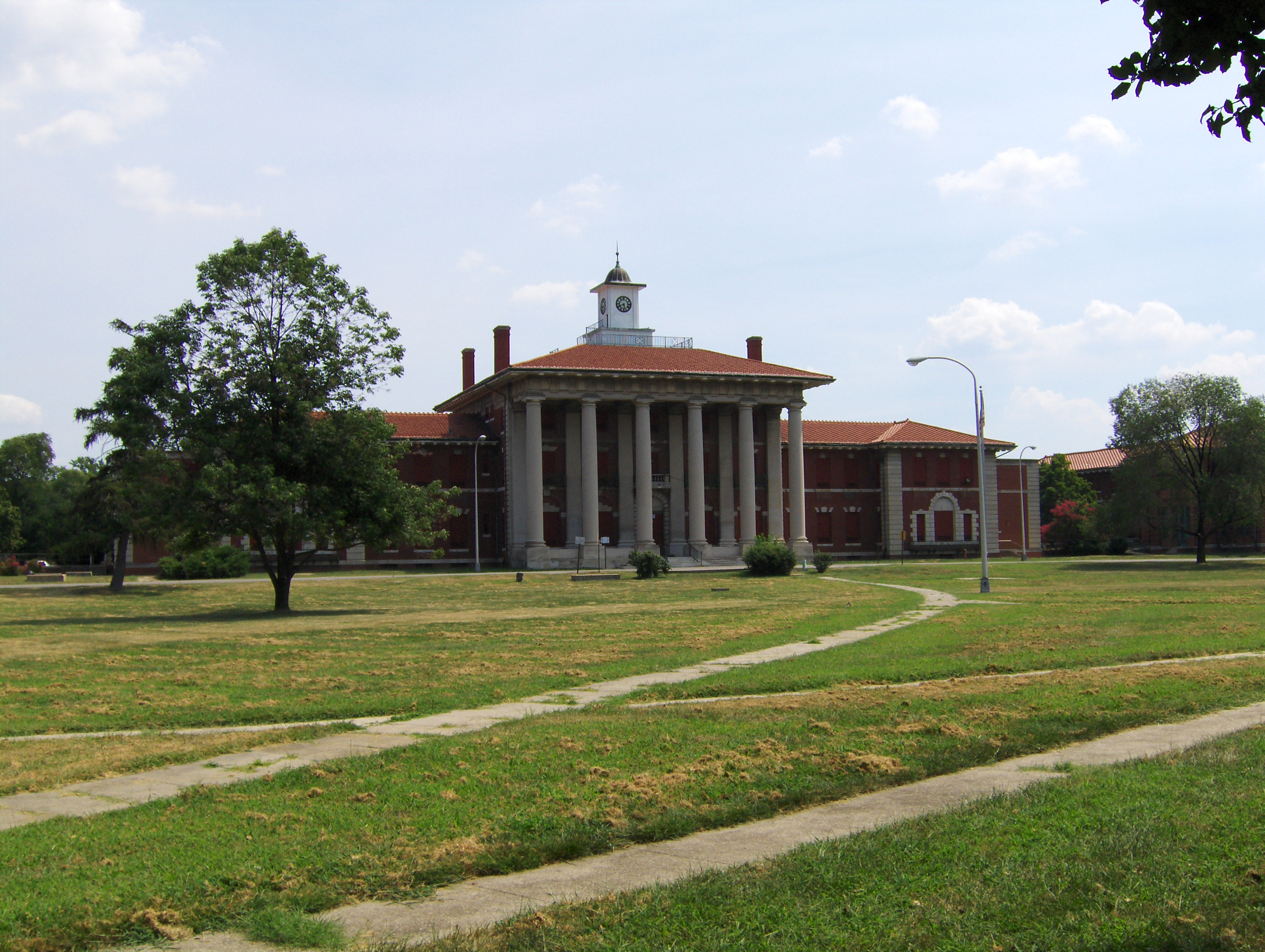
Saint Elizabeths Hospital, Washington, D.C. public psychiatric facility.

James Holmes was charged with 166 counts of murder, attempted murder and other related offenses from his July 20, 2012 shooting rampage in an Aurora, Colorado movie theater that left twelve dead and at least fifty-eight injured.  According to his attorneys, Holmes was in "the throes of a psychotic episode when he committed acts that resulted in the tragic loss of life."  With this admission and the District Court Judge's acceptance of Holmes’s plea of not guilty by reason of insanity, the scope of the trial was transformed from a determination of factual guilt to whether or not Holmes was sane, and thus culpable for his actions.  Insanity pleas have been around since ancient times, and the defense is based on the notion that some people with mental illnesses because of a lack of understanding or because of an inability to resist an urge are not culpable for their actions.  As the defense has developed through time, it has been inconsistently applied throughout the states.   


In Colorado, after an insanity plea is accepted, the defendant is ordered to be examined by an independent psychiatrist to determine his or her sanity.  In the case of Holmes, he was institutionalized in the Colorado Mental Health Institute in Pueblo where he was examined and is under constant supervision.  On September 6, 2013 the Court received the 128 page sanity report and copies were given to both the State and to Holmes's defense attorneys.  This report outlines the psychiatrist’s opinion of whether Holmes meets Colorado's legal definition of insanity, i.e. the inability to tell the difference between right and wrong because of a mental disease or defect, known as the M’Naughten rule.

The murder trial of James Holmes will begin sometime in 2014, and due to Holmes’s insanity plea, the government will have to prove beyond a reasonable doubt that Holmes was sane at the time of the shooting.[1]  Colorado is one of the eleven states that place the burden of proof in insanity defense cases on the State.  To compare, D.C. follows the Model Penal Code rule for the insanity defense; requiring that the defendant prove, by a preponderance of the evidence, that they were insane at the time of the crime.[2]  

Despite the fact that the State shoulders the burden, an insanity plea is not a get-out-of-jail-free card.  This is best evidenced by the microscopic number of insanity pleas that are filed in Colorado.  Recent numbers from the Colorado Judicial Branch show that defendants invoked the insanity defense in only 0.09% of all felony cases between 2001 and 2011, and the plea was successful only 28% of the time.  The scarcity of the pleas might be due to their inherent riskiness.  In Colorado, the plea requires the defendant’s full cooperation while he or she is subject to an independent psychiatric evaluation, and if the defendant does not cooperate, they are prohibited from introducing their own mental health experts to testify on their behalf, at trial or at a death-penalty hearing.  In this context, cooperation has its common and ordinary meaning, i.e. to cooperate means to “work or act together toward common end or purpose.”[3]  Generally, in cases where a defendant is non-compliant, the defendant has chosen to remain silent.  Additionally, not only is whatever was said to the psychiatrist admissible at trial, but the psychiatrist can comment on the defendant’s silence or non-compliance.[4]  This report is vastly important in determining the innocence or guilt of the party; as Michael Perlin, a New York Law School professor, has written in several papers, the final outcome in insanity cases matches the findings of the psychiatric reviews as often as 90% of the time.

As mentioned before, after an insanity plea is accepted, the focus of the trial changes because the defendant is admitting that he or she committed the crime or crimes, but that he or she should not be held legally responsible for their actions.  Because of the transformative nature of the plea, Washington D.C., like other states, has safeguarded a defendant’s right to, or not to, plead guilty by reason of insanity.  In D.C., this is called a Frendak inquiry.[5]  If there is a substantial question of the defendant’s sanity at the time of the crime, the trial court is required to determine whether, based on the defendant’s present mental capacity, he or she can intelligently and voluntarily waive the insanity defense.[6]  A pre-trial determination of competency does not preclude a Frendak inquiry if the defendant’s mental health at the time of the crime is called into question at any phase of the trial.[7]  The exact type and amount of evidence that will trigger the court’s obligation to conduct a Frendak inquiry is fact specific and will vary from case to case.  The goal of the inquiry is to ensure that the defendant knowingly is aware of the availability of the defense, and whether or not the defendant recognizes the advantages and disadvantages of the case.  If a defendant is found to have waived the defense knowingly and willingly, the court cannot impose the defense over the defendant’s objection.

The determination of whether or not to pursue this defense is something that must be weighed carefully; as mentioned above, when a defendant raises an insanity defense and is compelled to be examined, the defendant is basically waiving their Fifth Amendment privileges with regard to that psychiatric testimony.[8]  Additionally, those who are found guilty after raising the insanity defense generally serve significantly longer sentences than defendants convicted on similar charges who chose not to raise it.[9]  Further, even if the defendant is found not guilty by reason of insanity, they could be detained for a longer period than they would have been if they were found guilty.  This is because the defendant is committed to a mental facility until a time he or she is found to be sane; to put it in perspective, the average stay in St. Elizabeths is eight years.  As an attorney, it will sometimes make more sense to not try to raise the insanity defense in every minor case, because of the potential lengthy stay. 

Even though the latter two reasons listed above might not be applicable to Holmes, because he was looking at either life in prison or the death penalty, he still initially pled not guilty.  He was eventually allowed to change it to not guilty by reason of insanity, but the fact that it was not initially raised is telling of the complicated calculus that defense counsel has to take into account.  


Cyle Barber
Senior Editor, Criminal Law Practitioner


Picture by Tomf688 via Wikimedia Commons.


[1]Colo. Rev. Stat. § 16-8-105.5 (2013).
[2]D.C. Code § 24-50.
[3]People v. Dondurant, 296 P.3d 200, 209-11 (Colo. App. 2012).
[4] See Johnson v. People, 470 P.2d 37, 76 (Colo. 1970); People v. Tally, 7 P.3d 172, 175 (Colo. App. 1999); People v. Vialpando, 954 P.2d 617, 622 (Colo. App. 1997).  
[5] Frendak v. United States, 408 A.2d 364 (D.C. 1979).
[6] Id at 378.
[7] See Phenis v. United States, 909 A.2d 138, 159 (D.C. 2006) (finding that the defendant’s history of mental problems and his behavior at trial should have prompted the court to conduct a Frendak inquiry). 
[8] See United States v. Byers, 740 F.2d 1104, 1115 (D.C. 1984).
[9] Michael Perlin, Mental Disability Law: Civil and Criminal § 9C-3.