Showing posts with label First Amendment. Show all posts

Tuesday, November 4, 2014

How Real is a Facebook Threat?

The Supreme Court agreed in June 2014 to hear the case of Elonis v. United States, an important First Amendment challenge that will attempt to clarify after years of ambiguity and split decisions in the lower courts the question of when threats, specifically internet threats, should be taken seriously by the law.  The case will be heard on December 1st of this year, and will clarify whether threats of violence made on social media sites such as Facebook, should be judged by (1) whether the speaker intended to harm anyone, or (2) whether the recipient was genuinely afraid of being harmed.  Essentially, it is a decision that will decide whether the crime should be judged by the actor’s subjective intent or the target’s subjective belief.

Online death threats are becoming all too common.  Recent examples include an 11-year-old who faced death threats through Facebook over his love of hunting, a mayor whose life was threatened by his paper boy, and hundreds of Harvard students who received emails from a sender who threatened to “shoot all of you” and “kill you individually.”

Tuesday, October 21, 2014

Texas Protects Harassers’ Constitutional Rights in the Name of “Self-Expression”

A decision from the highest criminal court in Texas is the latest seeking to define the line between privacy and constitutionally protected speech.  Last month, the Texas Court of Criminal appeals struck down a portion of a state law that prevented people from taking “upskirt” pictures, holding that the law was unconstitutional on its face because it violated free-speech rights and penalized people’s thoughts at the expense of trying to protect people from harassment. The case involved a Texas statute, which made it a felony crime to photograph or record someone without the other person’s consent and “with the intent to arouse or gratify the sexual desire of any person.”

The Texas court found this statute to be unconstitutional under the Texas Constitution, and the U.S. Constitution’s First Amendment’s right to free speech and individual thought.  The law was meant in part to protect against predatory photographers who covertly take pictures under women’s skirts or down their blouses than then post them on the Internet.  Complaints of such incidents have become common across the nation as mobile phones equipped with cameras are on the rise.

Tuesday, July 8, 2014

3D Gun Printing: The End of Gun Control in the United States?


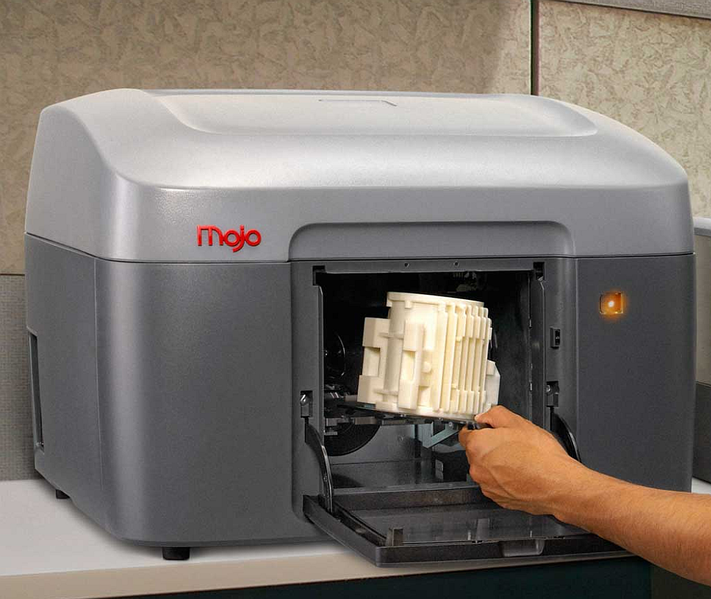
File:Mojo 3D Printer.pngThe recent shootings at the University of California, Santa Barbara and in Las Vegas have brought about the age-old question of gun control in the United States.  While the Second Amendment of the United States Constitution has its supporters and critics, the federal government has enacted regulations intent on securing the safety of society by requiring citizens who purchase firearms to register them and hold the necessary licensure.  However, recent events are changing how we obtain weapons.  What if citizens did not need a license to purchase a firearm at a store, but could instead acquire them with just a computer, a block of plastic, and a 3D printer?