Showing posts with label Supreme Court. Show all posts

Tuesday, April 21, 2015

Skype and the Right to Confrontation

On February 23, 2015, the petition for certiorari was denied in the case of New Mexico v. Schwartz.  What the Court failed to realize by denying this petition, is that defendants all over the nation will not get the full protection the United States Constitution requires.  As technological advances increase, our use of technology in the courtroom increases as well.  From computer monitors to email to video testimony, technology has a significant impact on the way cases are handled in the courtroom.  The ease of technology, as well as its accessibility, makes it an ever-growing issue when applied the Constitution – issues the Framers never could have imagined.[1]  In New Mexico v. Schwartz, the defendant argues that by allowing four witnesses to testify via Skype, his 6th Amendment confrontation clause rights were violated.

In this case, Martha McEachin moved from Los Angeles to Albuquerque in March 2008. She had only been living with the defendant for a month and a half when she went missing.  In May 2008, a decomposed body was found wrapped in an air mattress with sheets in an alley about 500 feet from the Defendant’s apartment.  A two-year investigation ensued and the defendant was charged with McEachin’s murder.

At the trial, four of the State’s witnesses testified using Skype.  The defendant argues that this use of video testimony violated his 6th Amendment rights.  The Confrontation Clause states that in a criminal prosecution the defendant has the right to be confronted with the witnesses against him.  The defendant argues that video testimony via Skype does not satisfy this right.  The lower court explains that the right the Confrontation Clause gives is a guaranteed face-to-face meeting with the witnesses who are appearing before the jury.  There may be exceptions to this right; however, they must be narrowly tailored to include situations that are necessary to further an important public policy.  Without a particularized showing of necessity, the right of confrontation stands.  The court goes on to explain that mere inconvenience for a witness is not sufficient grounds to violate this face-to-face right.  The court believes that the state did not show necessity for the use of video testimony, and therefore reversed the defendant’s conviction.

The outcome of this case, however, was not ideal.  If this case had made it to the Supreme Court, the question of how to determine when video testimony via Skype is appropriate would have been determined.  Practitioners and judges are now left with an open-ended question of when this type of testimony does or does not violate the Confrontation Clause.  While an argument can be made for either side, concrete criteria to protect defendants should be implemented.  With the fast rate of growing technological advances, this is not the last time the Supreme Court will be presented with this particular issue.  Right now the best a judge can do is balance the interest of the State with the rights of the defendant.  It seems this is a losing battle either way.

Kelsey Edenzon
Staffer, Criminal Law Practitioner


[1] Jamie Walker and Laura Carlsen, “Can I Testify via Skype?” Using Videoconferencing Technology to Enhance Remote Witness Testimony, NWSidebar (June 11, 2014).

Friday, April 17, 2015

Judicial override is a concept that has been in place since the late 1970s. Its a permissive doctrine that gives state trial judges the option to override a jurys sentencing determination and institute a sentence the judge believes is more suitable. In Alabama, judicial override has been used frequently to override jury verdicts of life without parole for the death penalty. The Supreme Court will soon decide whether to grant certiorari on the question of whether Alabamas use of the judicial override option violates a defendants Sixth Amendment right to a jury as well as the Eighth Amendments prohibitions on arbitrary and capricious death sentences and cruel and unusual punishment.

Tuesday, April 7, 2015

Protect the Children or Protect the Defendant?

In October 2014, the Supreme Court agreed to hear an appeal of the Ohio Supreme Court’s decision, in State v. Clark, to overturn a man’s convictions for child abuse.  The Court will have to decide two issues in the case: whether a mandatory reporter of child abuse acts as an agent of law enforcement for the purposes of the confrontation clause, and whether admission at trial of a child’s hearsay statements made to his teachers violates a defendant’s sixth amendment right to confront the witnesses against him.

The case arose after a preschool teacher noticed whip-like marks and other injuries on one of her three-year-old students at school.  After asking the three-year old some questions about the marks, she got the other teachers involved, and they came to suspect that the child had been abused.  Some of the child’s answers to the teachers implicated his mother’s boyfriend, Mr. Clark, as the abuser.  One of the teachers, in accordance with her mandatory duty to report child abuse, called the child abuse hotline and child protective services investigated the matter.  Mr. Clark was later arrested for child abuse and at trial, the court found the three-year old incompetent to testify, but permitted his teachers to testify to the child’s statements.  Mr. Clark was convicted of four counts of felonious assault, two counts of child endangering resulting in serious physical harm, and two counts of domestic violence, and was sentenced to 28 years in prison.

Tuesday, March 10, 2015

Legalize Veritaserum: A Defense of the Use of Neuroimagery in Lie Detection


Like the rest of the country’s coolest kids in high school, I dedicated what some would call an “unhealthy” amount of time to memorizing minute details about the Harry Potter universe.  Among my favorite of J.K. Rowling’s plot-hole-fillers du jour was a potion known as veritaserum, which would compel its drinker to tell truths, and only truths.

Friday, February 13, 2015

Ohio v. Clark


The Supreme Court will hear oral arguments in Ohio v. Clark on March 2, 2015.

Issues:
Whether an individual’s obligation to report suspected child abuse makes that individual an agent of law enforcement for purposes of the Confrontation Clause; and whether a child’s out-of-court statements to a teacher in response to a teacher’s concerns about potential child abuse qualify as “testimonial” statements subject to the Confrontation Clause

Tuesday, February 3, 2015

Tuesday, January 6, 2015

Jones v. United States: Punishment Without Conviction?


Federal sentencing law is widely applied to punish offenders not only for offenses of which they have been convicted, but also, in the same proceedings, for offenses of which they have not been convicted.  When convicted of at least one charge, a judge may consider relevant conduct in sentencing the defendant, and even increase the sentence for charges that were never charged.  Scholars are split on the subject.  On the one hand, some argue the use of relevant conduct at sentencing is often legitimate.  Others object to the practice because “the addition of the relevant conduct result[s] in the identical punishment range which the defendant would have encountered had [they] been convicted on all counts.”

Tuesday, November 11, 2014

Whitfield v. United States: De Minimis Movements


Whitfield v. United States
Docket No. 13-9026
Argument Date: Dec 2, 2014

ISSUE:
On December 2, 2014, the Supreme Court of United States will decide whether 18 U.S.C. § 2113(e), which applies to a bank robber who forces another person to accompany him while in flight from the crime scene, requires proof of more than a de minimis movement of the victim.  § 2113(e) states: “whoever, in committing any offense defined in this section [bank robbery], … forces any person to accompany him without the consent of such person, shall be imprisoned not less than ten years, or if death results shall be punished by death or life imprisonment.”  Federal circuit courts differ on how to interpret the words “to accompany him.”  The Fifth and Tenth Circuits have held force-accompaniment only happens upon a showing of substantial movement of a victim as compared to what usually happens during a bank robbery.  However, the Fourth Circuit held that this section applies to all forced movements no matter how insubstantial.

Tuesday, November 4, 2014

How Real is a Facebook Threat?

The Supreme Court agreed in June 2014 to hear the case of Elonis v. United States, an important First Amendment challenge that will attempt to clarify after years of ambiguity and split decisions in the lower courts the question of when threats, specifically internet threats, should be taken seriously by the law.  The case will be heard on December 1st of this year, and will clarify whether threats of violence made on social media sites such as Facebook, should be judged by (1) whether the speaker intended to harm anyone, or (2) whether the recipient was genuinely afraid of being harmed.  Essentially, it is a decision that will decide whether the crime should be judged by the actor’s subjective intent or the target’s subjective belief.

Online death threats are becoming all too common.  Recent examples include an 11-year-old who faced death threats through Facebook over his love of hunting, a mayor whose life was threatened by his paper boy, and hundreds of Harvard students who received emails from a sender who threatened to “shoot all of you” and “kill you individually.”

Tuesday, October 28, 2014

Rodriguez v. United States: De Minimis Car Searches

Rodriguez v. United States
Docket Number: 13-9972

Argument Heard: TBD

ISSUE:
The Supreme Court has previously held that, during an otherwise lawful traffic stop, asking a driver to exit a vehicle, conducting a drug sniff with a trained canine, or asking a few off-topic questions are "de minimis" intrusions on personal liberty that do not require reasonable suspicion of criminal activity in order to comport with the Fourth Amendment.[1]  This case poses the question of whether the same rule applies after the conclusion of the traffic stop, so that an officer may extend the already-completed stop for a canine sniff without reasonable suspicion or other lawful justification.

Friday, October 3, 2014

No Such Thing as Behind Closed Doors: How Technology Has Outdated the Third-Party Doctrine

Most people would agree with the assertion that if you want to keep something private, then you just shouldn’t tell anyone! And that is just the rule that the Supreme Court developed in Katz v. United States when it contemplated matters that are not considered “private,” in regards to the Fourth Amendment. The Court stated that “what a person knowingly exposes to the public . . . . is not a subject of Fourth Amendment protection.” A little over a decade later, the Court expanded this notion in Smith v. Maryland to create the third-party doctrine, which states that “a person has no legitimate expectation of privacy in information he voluntarily turns over to third parties.” The idea behind the doctrine is that citizens should take steps to protect their privacy or to preserve their secrets; and if a citizen puts their personal information out to another party (usually a business with the third-party doctrine), then that information is obviously not private—and more importantly, it is not protected under the Fourth Amendment from government intrusion.

Tuesday, July 29, 2014

Supreme Court Watch Case Update: Navarette v. California: Corroborating Anonymous Tips in Regards to Drunk Driving


UPDATED SECTIONS: SUPREME COURT AND PRACTITIONERS

Docket Number: 12-9490
Argument Date: January 21, 2014

ISSUE:
Whether the Fourth Amendment mandates an officer to corroborate an anonymous tip about a drunk or reckless driver before stopping the vehicle.

FACTS:
On March 28, 2000, the Court ruled in Florida v. J.L. that an anonymous tip identifying a man at a bus stop as having a gun did not justify a stop and frisk without some independent corroboration of the tip.  The Court, however, did not answer whether an anonymous tip that alleges great danger justifies a search where the tip was uncorroborated.  Although the Court said that allegations of a person carrying a bomb do not need to be corroborated before a search, this was mere dictum, failing to resolve the issue about drunk driving, which is at issue in the present case.

In Navarette v. California, the California Highway Patrol dispatchers received an anonymous telephone call alleging that a silver Ford F150 pickup truck ran the caller off the highway.  The anonymous caller also provided the car’s license plate number and the direction the car was driving on the highway.  This information was broadcasted to law enforcement and soon after two officers spotted the car.  While following the car, the officers did not witness any reckless driving, but stopped the vehicle nonetheless.  During the stop, after smelling marijuana, the officers searched the car and found four large bags of the illegal substance.  The officers proceeded to arrest the driver Lorenzo Navarette, and his passenger Jose Navarette.  Both men tried unsuccessfully to suppress the evidence of marijuana and ultimately pled guilty to transportation of marijuana.

The Navarette brothers are now appealing their convictions on Fourth Amendment grounds. The appeal is based on precedent stating that anonymous tips, alone, are insufficient to justify a search or seizure.  Since anonymous tips are inherently unreliable, officers are required to corroborate the information before conducting the search or seizure.

This case turns on whether there should be a “drunk or reckless driver exception” to the corroboration requirement of anonymous tips.  Since the Supreme Court decision in Florida v. J.L. did not address this issue, there is a split among the lower courts on deciding whether anonymous tips alleging drunk or reckless driving should be corroborated by police investigation before stopping a vehicle.  For example, the Eight Circuit upheld a vehicle stop even though the anonymous tip was not corroborated, reasoning that reckless driving is similar to a bomb-like danger that the Supreme Court referenced.  However, in Harris v. Commonwealth, the Virginia Supreme Court held that an anonymous tip about drunk driving did not justify a vehicle stop because the officer was unable to corroborate drunken or erratic driving despite having an opportunity to observe the driver before stopping the vehicle.  Due to this split, depending on where you are in the country, an officer can stop an alleged drunk driver based on an uncorroborated anonymous tip.
           
PETITIONER’S ARGUMENT:
The uncertainty of whether an officer needs to corroborate a drunk and reckless driving tip is part of the Navarette brothers’ argument They argue that the Court should resolve this issue and rule that anonymous tips in regard to drunk or reckless driving should be corroborated to provide the requisite reasonable suspicion to justify a stop.  Since there was no corroboration in this case, the Supreme Court should reverse their convictions because precedent dictates that anonymous tips should be corroborated.

RESPONDENT’S ARGUMENT:
On the other side, the Californian government believes that the officers complied with the narrow holding of Florida v. J.L., namely that that case was limited to an anonymous report of a nonthreatening possessory offense.  California’s contention is supported by other jurisdictions that have interpreted Florida v. J.L. as providing a balancing act, that “the need for corroboration of illegal conduct identified by the anonymous tipster is offset by the inherent danger of the conduct itself and the overall reliability of the tip.”  For these jurisdictions the “conduct” is drunk driving.

UPDATE, SUPREME COURT:
On April 22, 2014, the United States Supreme Court rendered an opinion in Navarette v. California.  Justice Thomas, writing for the majority, upheld the California Court of Appeals decision holding that conducting the traffic stop complied with the Fourth Amendment.  The stop, based on the facts of this case, complied with Fourth Amendment because under the totality of the circumstances, the officer had reasonable suspicion to stop the car, believing the driver was intoxicated.

The Court reached its decision by first analyzing its Fourth Amendment jurisprudence and seeing how the facts of this case fit into the established case law.  In order to conduct a traffic stop, an officer needs “reasonable suspicion,” which is dependent on both the quality of the information and its degree of reliability.  Reasonable suspicion requires less than probable cause and less than a preponderance of the evidence.
           
Reasonable suspicion to conduct a traffic stop applies in the context of anonymous tips given to the police.  Anonymous tips alone are rarely held to rise to the level of reasonable suspicion.  However, under certain circumstances, the Court said that some anonymous tips can be sufficiently reliable to make a Terry stop.  One such circumstance was found in Alabama v. White, where the Court held that the anonymous tip given to the police held enough predictive information to imply that the tipster was familiar with the driver’s activities and had reliable access to information in the driver’s illegal activities.  But, an anonymous tip saying that a man in a plaid shirt at a bus stop was carrying a gun, was not enough to give officers reasonable suspicion.
           
By looking at these two cases, the Court held that the 911 phone call was sufficiently reliable to conduct the traffic stop.  The Court found that the anonymous tip was reliable because it was akin to eyewitness testimony, that the time span between the incident and the phone call was indicates that the caller made the call right after the caller was run off the road, and the use of the 911 emergency system.  The caller used “explicit and detailed description” of the wrongdoing along with descriptive indicators of the car. In looking at the time frame between the time of the incident and the time the 911 call was made, the Court held that the tip was reliable because it was contemporaneous.  Looking to the law of evidence, Justice Thomas compared this to the present sense impression and excited utterance hearsay exceptions.  Finally, in looking at the fact that the caller used the 911 emergency system, the Court held that because these calls can be recorded, traced, and the caller can be identified, it justified the officer’s reliance of the anonymous tip.
           
After reaching the decision that the call was reliable to create reasonable suspicion that “criminal activity may be afoot,” the Court looked to see if it created reasonable suspicion to think that drunk driving was occurring.  The Court held that it was based on the objectively reasonable viewpoint of a police officer and the allegations made by the caller.
          
Justice Scalia, along with three other Justices dissented, saying that he would reverse the California Court of Appeals.  He reasoned that the police officers knew nothing about the tipster and argued that the hearsay exceptions were an inappropriate analogy.  Furthermore, Justice Scalia challenged the reasoning about the 911 emergency systems’ ability to identify callers because an average anonymous caller may not know about this capability and we do not know if this particular caller knew about it.  Finally, Justice Scalia held that the officers, per their own observations, had good reason to believe that the driver was not drunk since the driver was not driving recklessly or in any manner to suggest that he was drunk. 

UPDATE, PRACTITIONERS:
The Court here did not carve out a Fourth Amendment exception for drunk driving.  Rather, the Court limited their opinion to the facts of this case and analyzed it based on existing case law.  While on the one hand it appears that the Court maintained the status quo in regards to anonymous tips, it has in some sense lowered the strict anonymous tips alone are not enough to establish reasonable suspicion bar.  In a very similar or identical future fact pattern, a police officer will need less evidence to conduct a traffic stop. 

Written by Cassandre Plantin
Staffer, Criminal Law Practitioner 

Tuesday, April 22, 2014

Supreme Court Watch Case Update: United States v. Castleman Decision


UPDATED SECTIONS: SUPREME COURT AND PRACTITIONERS

Docket Number: 12-1371
Argument Date: January 15, 2014
Decided: March 26, 2014

ISSUE:
Whether a state conviction for misdemeanor domestic assault, defined as intentionally or knowingly causing bodily injury, falls under the scope of misdemeanor crime of domestic violence for federal prosecution purposes.


Tuesday, April 15, 2014

Indigent Defendants and the Role of Their Public Defenders


On March 18, 1963, the Supreme Court held in Gideon v. Wainwright that states are responsible for representing defendants who are unable to afford their own attorneys.  Justice Hugo Black gave the Court’s opinion and stated, "in our adversary system of criminal justice, any person hauled into court, who is too poor to hire a lawyer, cannot be assured a fair trial unless counsel is provided for him.  This seems to us to be an obvious truth."  This obligation imposed on states stems from the Sixth Amendment, which establishes a defendant’s right to counsel.  It also stems from the due process clause of the Fifth Amendment, which guarantees a defendant’s right to a fair legal process.  Today however, fifty years after Gideon was decided, the quality of legal representation afforded to indigent defendants is concerning in some states. 

Friday, March 28, 2014

Prosecutorial Discretion: When Is Enforcement Discriminatory?

Dinesh D'Souza
In criminal law, those accused of wrongdoing typically claim innocence and maintain that they have done nothing wrong.  But what about when an individual admits to the crime itself while arguing that the enforcement of the specific law against him is discriminatory in nature?

Friday, January 31, 2014

Phantom Tipsters: Oral Arguments in Navarette v. California

In this day and age is it still possible to make anonymous phone calls?  With the advent of caller identification on most phones, at the very least, one’s phone number is typically known to the person he is calling.  However, through the use of blocking one’s number or using an anonymous flip phone, it is still possible to remain anonymous when calling another person.  Further, it could be argued that simply knowing someone’s phone number does not give you any identifying information about that person.  This particular issue of how to handle anonymous tips given to the police was debated on January 21, 2014 and will be decided by the United States Supreme Court through the case Navarette v. California.  

Friday, November 8, 2013

The Supreme Court Denies Appeal from Wrongfully Accused Duke Lacrosse Players


The Supreme Court refused to hear an appeal from three Duke Lacrosse players who were wrongfully accused of rape in March 2006.  David Evans, Collin Finnerty, and Reade Seligmann filed a lawsuit against the City of Durham, North Carolina, holding it responsible for pursuing the rape charges against them without probable cause.  The charges stemmed from false allegations made by Crystal Mangum, a stripper hired to perform at a team party held on March 13, 2006.  Without any evidentiary basis, Evans, Finnerty, and Seligmann were indicted for Mangum’s alleged rape.[1]  The Supreme Court’s recent refusal to hear their appeal marks the end of the players’ civil rights lawsuit.  Consequently, the Court’s refusal leaves many unanswered questions about the prosecutorial and police misconduct that occurred during the case.


Michael Nifong was the Durham District Attorney behind the unjust prosecution of Evans, Finnerty, and Seligmann.  Around the same time that Crystal Mangum’s rape allegations surfaced, Nifong was facing the pressures of re-election.  In order to win, Nifong desperately needed the votes of Durham’s black community, who were outraged by Mangum’s story.  Nifong saw the rape case as the perfect opportunity to win their votes, and he quickly made it the center of his campaign.[2]  With a clear motive compelling him, Nifong began a ruthless attack on the lacrosse players, indifferent to the truth.

Nifong blatantly violated his ethical obligations as a prosecutor throughout the case.  First, there was no probable cause to charge the lacrosse players with rape, since evidence supporting Crystal Mangum’s story was almost non-existent.  The Supreme Court defines probable cause as “…a reasonable ground for belief of guilt.”  In the Duke case, there was no DNA or other physical evidence linking the defendants to the victim, and the sole basis of Mangum’s claims were her inconsistent versions of events, which changed multiple times.[3]  This evidence was insufficient to establish a reasonable belief that the players were guilty, but Nifong pursued the case anyway.

Nifong also violated his Brady obligation, which precludes a prosecutor from withholding exculpatory evidence from the defense that is material to the outcome of the case.  Not only did Nifong withhold evidence that showed Mangum’s inconsistencies in identifying her rapists, but he also withheld DNA results that revealed no match of any lacrosse player in or around Mangum hours after the alleged rape.[4]  In both instances, the evidence withheld was material to the outcome of the case.  Mangum’s inconsistencies seriously undermined her credibility, and the DNA results were almost conclusive proof of the players’ innocence.  Nifong also made extrajudicial statements to the public proclaiming the lacrosse players’ guilt, even though he knew the facts did not support the claim.  Based on Nifong’s repeated misconduct, he clearly had no interest in presenting the truth and pursuing justice.

The Duke Lacrosse case illustrates prosecutorial misconduct at its worst.  Nifong had tremendous power over the lives of the accused as the elected District Attorney, since no one was going to challenge his discretion.   Instead of using his power to seek justice, he abused it to further his own motives.  Fortunately, Nifong’s misconduct was exposed, and Evans, Finnerty, and Seligmann were declared innocent.  Accordingly, Nifong was disbarred and disgraced by the legal community.  However in many cases, prosecutorial misconduct is never exposed, probably because it happens behind closed doors.  Most of the time, defense attorneys are unaware the misconduct is going on, especially with regards to Brady violations.  A possible solution to this problem could be mandatory “open discovery laws” in all jurisdictions, which would require prosecutors to turn over all evidence in their case files to the defense.  

Another concern regarding prosecutorial misconduct is the fact that it is often intertwined with police misconduct.  Clearly, Nifong did not act alone during the Duke case.  Durham police officers and investigators directly contributed to the injustices of this case.  However, many of their identities are still unknown, as well as certain details of their scheme.  Sadly, the Supreme Court’s dismissal of the players’ civil lawsuit means many of these facts will remain unknown.


Samantha Beyda
Senior Staffer, Criminal Law Practitioner


Image by Ravs62687 at the English Wikipedia [Public domain], via Wikimedia Commons.


[1] Stuart Taylor Jr. & K.C. Johnson, Until Proven Innocent: Political Correctness and the Shameful Injustices of the Duke Lacrosse Rape Case 96-97 (St. Martin’s Press, 1st ed. 2008). 
[2] Id. at 84-85.
[3] Id. at 36-38. 
[4] Id. at 162-163. 


Tuesday, October 22, 2013

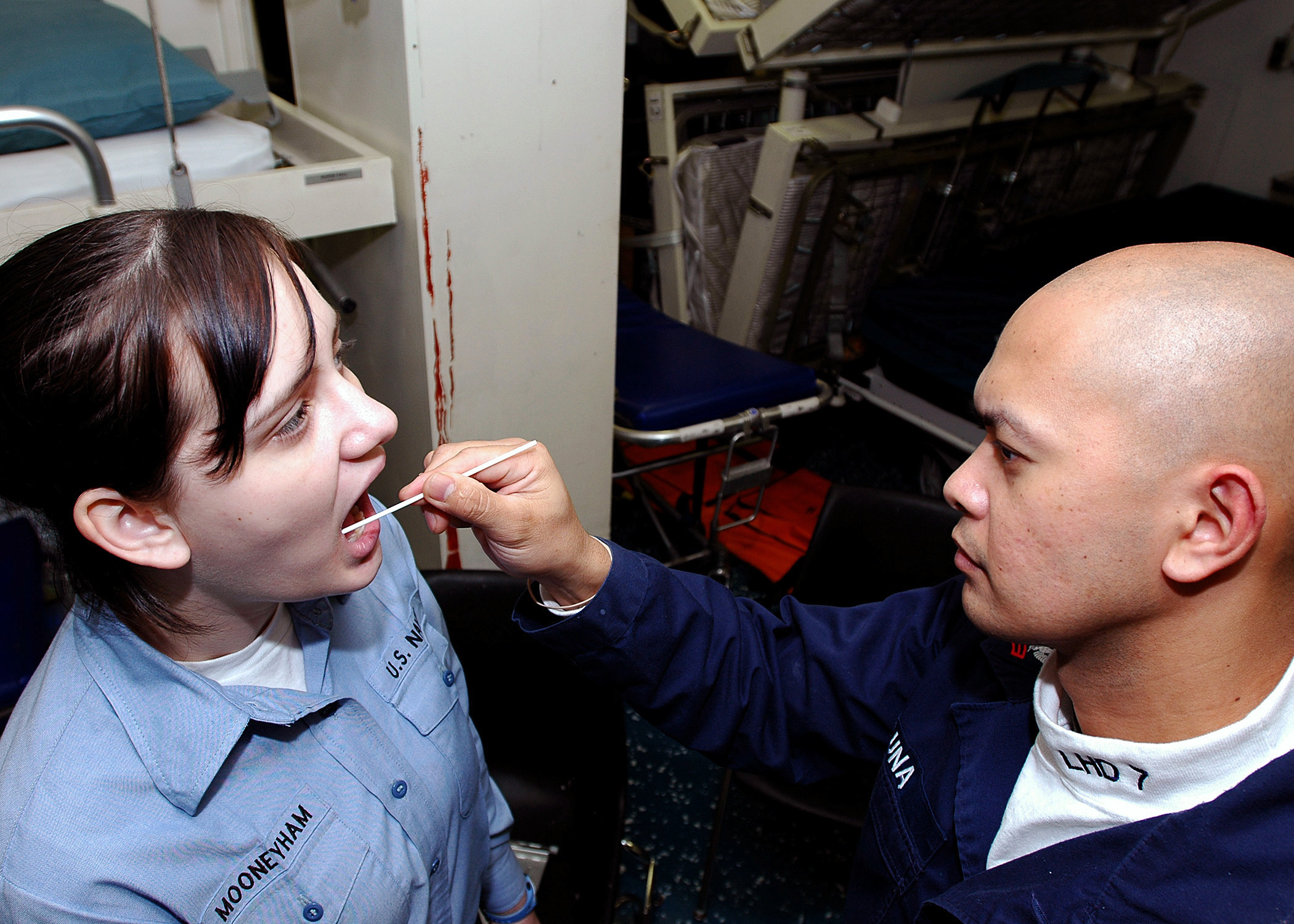
Buccal Swab "Booking Procedures": Lower Courts Struggle to Apply Maryland v. King


On June 3, 2013, the Supreme Court handed down a widely-anticipated opinion in Maryland v. King.  In this case, the defendant’s DNA was collected by the state after an arrest for first-degree assault.  Though he pled to a lesser misdemeanor charge, King’s DNA was found to be a match for an unsolved 2003 rape for which he was eventually convicted.  The Court addressed the following issue: “whether the Fourth Amendment prohibits the collection and analysis of a DNA sample from persons arrested, but not yet convicted, on felony charges.”  Justice Kennedy, writing for the Court, did not examine the issue in isolation, but considered it in light of Maryland’s DNA Collection Act, which contained various protections for the accused.  Specifically, DNA could only be collected if the individual was charged with a violent crime, could not be recorded or stored until after the individual was arraigned, and samples would be destroyed if the criminal action did not result in a conviction; further, the DNA could not be used for any purpose other than identification.


The Court found that the DNA collection (via buccal swab) was a search for Fourth Amendment purposes, and employed a reasonableness test, balancing the intrusion on the individual against the legitimate interests of the state.  The intrusion, the Court held, was minimal; on the contrary, the state’s interest (that is, “the need for law enforcement officers in a safe and accurate way to process and identify the persons and possessions they must take into custody”) was compelling.  Justice Kennedy viewed this kind of DNA collection as part of identification and booking procedures such as fingerprinting or a “station-house search of the arrestee’s person and possessions.”  He also noted that “the Act provides statutory protections that guard against further invasion of privacy.”  Thus, by a five-four margin, the Court upheld Maryland’s DNA Collection Act along with similar statutes in twenty-eight states.

This opinion ignited controversy, and left lower courts (particularly those in states without DNA collection statutes) with little guidance regarding how to treat the collection of DNA from arrestees.

Some of the strongest objections have been from Fourth Amendment privacy advocates (such as Justice Scalia), who note that “your DNA can be taken and entered into a national DNA database if you are ever arrested, rightly or wrongly, and for whatever reason."  The Ninth Circuit recently considered the case of an individual found guilty of a drug conspiracy charge, who sought to have his DNA and blood sample returned to him (and deleted from CODIS, the federal database) after his period of supervised release was complete.  The majority did not reach his Fourth Amendment claim, but the dissent noted that Kinghad drastically expanded the pool of individuals subject to DNA testing by the state— an estimated fifty-two percent of men are arrested at some point in their lifetime.[1]  These advocates argue that the individual’s privacy interest should have been weighted more heavily by the Court.

Other advocates argue that the State’s interest should be weighted less heavily, and question the identification rationale.  Because of the permanent nature of individuals’ DNA profiles, a law enforcement agency can obtain the same degree of identification following an arrestee’s conviction as could be obtained before the conviction.[2]  Further, officers are usually required to identify arrestees before sending DNA samples to be tested, so the King majority’s identification rationale is redundant.[3]

Regardless of scholarly dispute on Maryland v. King, lower courts have struggled to apply the Court’s reasoning in two situations.  First, courts in jurisdictions without a DNA collection statute must determine whether such searches may proceed without statutory authorization, and whether they (the courts) have the authority to put protective limits on usage or storage absent statutory law on the topic.  Secondly, courts are faced with cases where DNA was not taken at the time of arrest (the “booking procedures” outlined in King) but where prosecutors seek a court-ordered buccal swab for evidentiary purposes sometime before trial and before conviction.

In United States v. Calhoun, a federal district court summarized the issue:

The Supreme Court recently held that taking and analyzing a cheek swab of an arrestee’s DNA is a legitimate police booking procedure that is reasonable under the Fourth Amendment . . . but [here,] the government requests that the Court require DNA testing at a time when the interests identified in King – “the need for law enforcement officers in a safe and accurate way to process and identify the persons and possessions they must take into custody” – no longer apply. . . [T]o assert that the collection of DNA would be done at this point as part of legitimate police booking procedure would be a pretext; the defendant was arrested approximately eight (8) months ago.[4] 

To resolve this tension, the Court required the government to show probable cause that “evidence of a crime will be found in a particular place”, namely, the defendant’s DNA, and found that the government had not satisfied that burden.[5]

The District Court for the Western District of New York addressed the same question and reached a different conclusion.  InUnited States v. Navarro-Gonzales, as in Calhoun, the government sought a court-ordered buccal swab well after the defendant had been arrested, intending to gather evidence for trial.  The Court purported to apply a probable cause test, and found that the government had satisfied its burden, but noted that King may have “alleviate[d] the need for a showing of probable cause.”[6]

In conclusion, the Supreme Court’s landmark decision in Maryland v. King created scholarly controversy, but also left lower courts struggling to apply its “booking procedure” rationale in cases where the buccal swab is not sought until long after arrest.  Additionally, courts in jurisdictions without statutorily-authorized DNA collection must decide whether they can authorize buccal swabs at all, and if they can, whether they have the authority to limit the usage of collected DNA absent statutory protections.  Until the issue reaches appeal, trial courts will be left to interpret Maryland v. King in a patchwork manner, leaving the rights of the accused up to the discretion of whichever judge they appear before.


Ryan Watson
Senior Staffer, Criminal Law Practitioner 


Image by Mass Communication Specialist 2nd Class Michael Starkey, via Wikimedia Commons.


[1] United States v. Kreisel, 720 F.3d 1137, 1161-62 (9th Cir. 2013) (Reinhardt, J., dissenting).
[2]Kelly Ferrell, Twenty-First Century Surveillance: DNA “Data-Mining” and the Erosion of the Fourth Amendment, 51 Hous. L. Rev. 229, 241 (Fall 2013) (referring to State v. King, 42 A.3d 549, 579 (Md. 2012), rev’d, Maryland v. King, 133 S.Ct. 1958 (2013)).
[3] Id. (citing Md. Code Regs. 29.05.1.4(K)-(L) (2012)).
[4] United States v. Calhoun, 2013 WL 3833206 (D. Ariz. July 24, 2013) (not yet reported).
[5] Id., at *1.
[6] United States v. Navarro-Gonzales, 2013 WL 3759956, *3 (W.D.N.Y. July 15, 2013) (slip op.).