Friday, July 19, 2013

No Money? No Freedom


On July 16, 2013, nineteen year-old Justin Carter will have his day in court.  But roughly five months ago, the teen was arrested and charged with making a terroristic threat on his Facebook page. He has been in jail ever since.  Carter’s nightmare started when another player in the Facebook game “League of Legends” called Carter “crazy.”  Carter responded with what he believed to be a humorous and witty retort, “I’m f***ed in the head alright.  I think I’ma [sic] shoot up a kindergarten and watch the blood of the innocent rain down and eat the beating heart of one of them.”  Just two months after the horrific shootings at Sandy Hook Elementary School, a Canadian woman who saw the post did not find it humorous or witty.  In what some might consider “Facebook stalking,” the woman discovered Carter’s address and noticed that it was close to an elementary school.  She promptly notified police, who then arrested the young teen.  Apparently, Carter’s humor was also lost on the Texas judge who set bond at an astronomical $500,000, which Carter’s family could not afford.

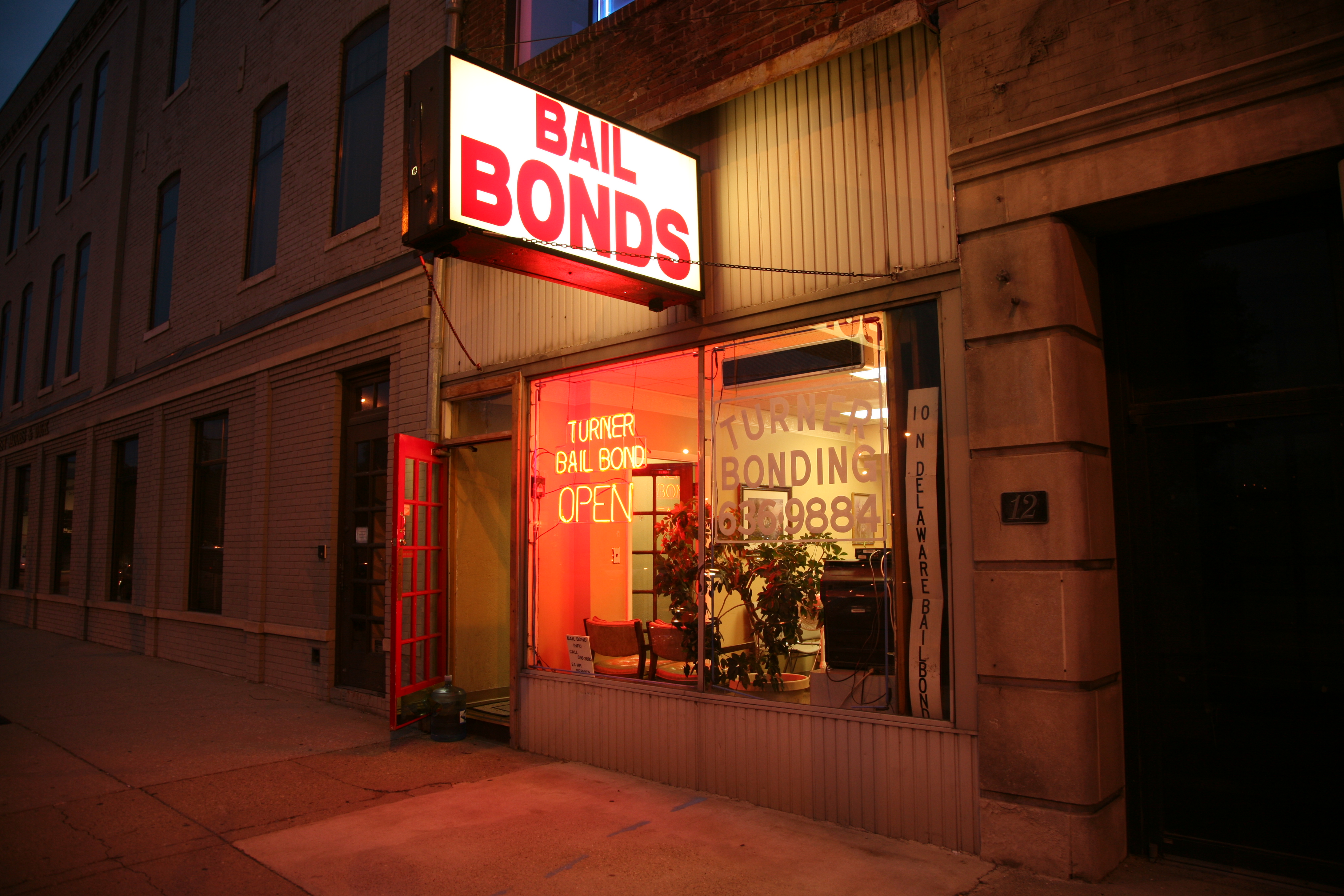
Individuals who cannot pay the bail amount, or get a bail bondsman or another agent to cover the charge, remain in jail until their scheduled court date.  Even if an individual is fortunate enough to get a bail bondsman to pay the bail amount, bondsmen do not lend money for free.  A bail agent may charge the defendant ten to fifteen percent of the bail amount before posting bond, a fee that the defendant will not get back regardless of the ultimate verdict.   Additionally, when the bail agent posts bond, if the accused does not return to court on the date of their trial, the bail agent is forced to pay the full amount of the bail.

While the vast majority of Americans would not be able to pay the hefty $500,000 bond set in the Carter case, it is much more common that poor defendants arrested for minor crimes cannot pay more modest bonds.  Because the bondsman must absorb the cost of the bond if the defendant fails to return to court, the bondsman is unlikely to post bond for small amounts, such as $500, because their ten percent take, $50, is too small to justify the risk.  As a result, the poorest and most financially unstable defendants are left in jail while their rich counterparts go free.  

While most states require judges to take public safety into account when setting bail, New York is different.  In New York, the main criterion for setting bail is the risk of the defendant not returning to court for trial.  Accordingly, judges weigh factors such as criminal record and ties to the community to determine whether a defendant is likely to flee the jurisdiction.  Therefore, a defendant with an extensive criminal record and no job, but who poses no risk to the community, might be held on a relatively high bail when the crime charged might only be a nonviolent misdemeanor.  Consequently, only forty-four percent of the defendants offered bail in New York City post bail before their cases go to trial.  In most states, bail determinations are made based on the seriousness of the crime charged as well as the risk of the defendant not returning for trial.

So what is the solution?  Supervised release.  Not only is a system of supervised release fair for poor defendants, but it also saves the taxpayers money.  According to New York’s Chief Judge Lippman, nationally, it costs taxpayers roughly $19,000 to keep a defendant in jail before trial, and only $4,000 on a supervised release program.  The D.C. Pretrial Services Agency is the national model for demonstrating that pretrial justice though supervised release can be achieved and a defendant’s incarceration does not need to depend on relative wealth.  The D.C. Pretrial Services Agency has virtually eliminated the use of money bail without jeopardizing public safety and using the least restrictive conditions of release.  In 2008, eighty percent of all defendants were released without money bond, fifteen percent were held without bail, and only five percent had financial bail.  Of the released defendants, eighty-eight percent made all court appearances, and eighty-eight percent completed the pretrial release period without a new arrest.     

Bail reform in D.C. began with the Federal Bail Reform Act of 1966, which provided many factors a judge must consider before making a pretrial release decision.  Some of these factors included employment, community ties, residence status, and other information not typically available to judges in making bail determinations.  By 1967, the D.C. Bail Agency was interviewing all felony defendants and making those results available to the judges.  However, financial bond continued to be the most popular method of determining detention because there was no way to supervise released defendants prior to trial.

In 1970, Congress expanded the D.C. Bail Agency and established an offender supervision unit.  Congress also drastically limited the circumstances in which defendants could be held in pretrial detention so as to promote pretrial release upon consideration of the risk of danger to the community in addition to failure to appear in court.  In conjunction with the new requirements, the Agency would make recommendations to the judges on all pretrial detentions based on an extensive assessment of the information collected on each defendant.  Additionally, the Agency established a Failure to Appear Unit, which resolves issues with bench warrants and allows defendants to voluntarily surrender on warrants; a Drug Testing Unit, which screens all defendants before their initial appearance in court and implements drug tests while defendants are on pretrial release; and an Intensive Supervision Unit, which provides supervision to defendants in halfway houses.

Finally, in 1992, the D.C. Code was updated to forbid the use of money bail to detain defendants, and only permit such use on rare occasions. Since then, D.C. Pretrial Services has only continued to grow and develop other means through which defendants can be diverted from jail.  Currently, the D.C. Superior Court runs a Drug Court Program to divert dependent or addicted defendants with nonviolent misdemeanor and felony charges, and offers participants a structured approach to treating their addictions.   The D.C. Superior Court also has a Mental Health Community Court to divert mentally ill defendants and improve their mental health by connecting them with the appropriate community services and monitoring their progress.

In conclusion, D.C. Pretrial Services has effectively alleviated the problem of pretrial incarceration due to wealth disparity and has effectively established a pretrial release system that results in the safe release of the vast majority of defendants without money bail.  Other states can learn from D.C. by recognizing the importance of extensive data collection in pretrial release determinations, and collaboration between pretrial services, judges, prosecutors, and public defenders. 


Jared Engelking
Blogger, Criminal Law Brief


Image by: I, Daniel Schwen [GFDL (http://www.gnu.org/copyleft/fdl.html), CC-BY-SA-3.0 (http://creativecommons.org/licenses/by-sa/3.0/)], via Wikimedia Commons.

Wednesday, July 17, 2013

UDC School of Law Professor Andrew Ferguson Weighs in on the Role of Juries and Their Verdicts


On Saturday, July 13, 2013, the jury in the State of Florida v. George Zimmermanreturned a verdict of not guilty for second-degree murder and manslaughter for the fatal shooting of Trayvon Martin.  After the jury returned the verdict, an expected flurry of news and social media erupted, some in support of the verdict and many others criticizing it.  Given the contentious issues surrounding the case, a vast amount of media attention has honed into the jury and what occurred during the jury's deliberation.  One can hope that the jury deliberation of the Zimmerman trial was similar to the one that took place in the famous stage play and movie, Twelve Angry Men, where the jurors carefully examined all the evidence in their quest for the truth and banished personal prejudices from their deliberation.  On the other hand, many fear that racial biases may have affected the deliberation of the Zimmerman jury that was made up of five Caucasian women and one Hispanic woman.  Whether the deliberation was similar to that of Twelve Angry Men or corrupted by racial bias, many questions remain.

In his article, "The Zimmerman Trial and the Meaning of Verdicts," Professor Andrew Ferguson of the University of the District of Columbia, discusses the Zimmerman jury, the (at the time undelivered) verdict, as well as juries and their verdicts in general.  


Professor Ferguson currently teaches criminal law, evidence and criminal procedure. Prior to his tenure at UDC, Professor Ferguson worked at the Public Defender Service for the District of Columbia.  His most recent book, which reflects what the American public is perhaps most interested in following the return of the Zimmerman verdict, is titled Why Jury Duty Matters: A Citizen's Guide to Constitutional Action, is a book about jury duty for jurors and those who may serve on juries, the first of its kind. 

In September, 2013 the Criminal Law Brief Blog will be posting reviews by Meghan Zingales and Robby Nothdurft on Professor Ferguson's book:  Why Jury Duty Matters: A Citizen's Guide to Constitutional Action. You can now follow the blog by email so you do not miss the reviews and you can stay up to date with weekly posts.  To read more about Professor Ferguson and a list of his publications click here. 


Raleigh Mark
Blog Editor, Criminal Law Brief


Left Photo: By VOA [Public domain], via Wikimedia Commons.

Right Photo: By ann harkness (Flickr: med-9529.jpg) [CC-BY-2.0 (http://creativecommons.org/licenses/by/2.0)], via Wikimedia Commons.

Friday, July 12, 2013

Due Process in the Context of Jones-Farmer Hearings: Implications of Kaley v. United States


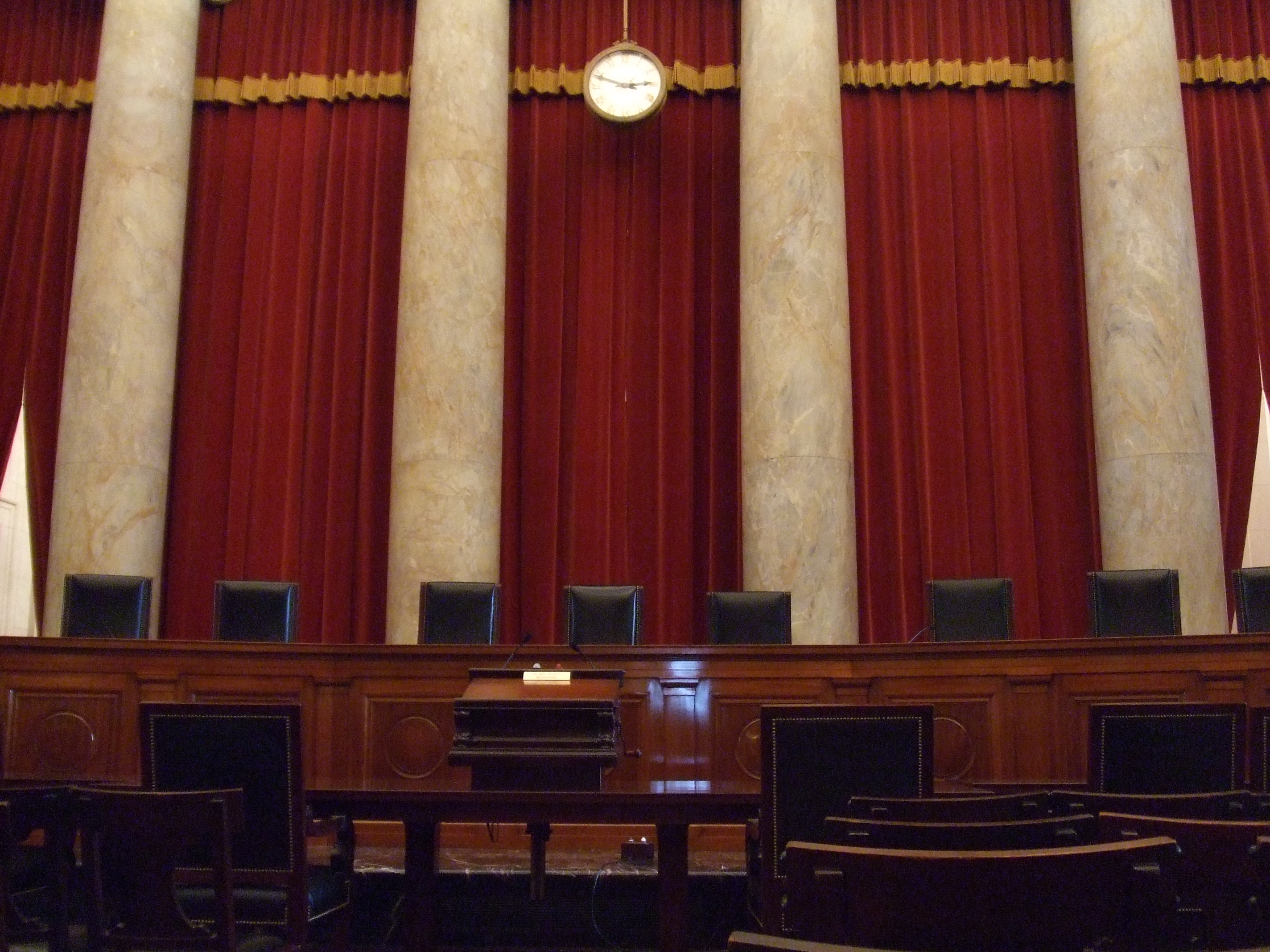
On March 18, 2013, the United State Supreme Court granted certiorari in Kaley v. United States.  Docket No. 12-464.  The case represents a complicated but narrow legal issue regarding the scope of a defendant’s right to challenge an order seizing property that the government claims is subject to forfeiture when the defendant asserts that the property is necessary to pay legal fees.  Typically, these seizure orders come during an ex-parte hearing where the government needs to show property is subject to forfeiture based on probable cause.  Those assets are then frozen until the conclusion of an underlying criminal proceeding.  The Federal Circuits permit defendants to challenge the traceability of those assets in post-indictment, pretrial Jones-Farmerhearings.  The Circuits are split, though, as to whether a defendant may challenge the evidentiary support and legal theory of the underlying charges or only the traceability of the property the government claims is subject to forfeiture.  

Forfeiture law is designed to combat the profit motive created by illegal activity by “[confiscating] property used in violation of the law, and to require disgorgement of the fruits of illegal conduct.”[1]  When the government chooses to pursue forfeiture against a suspect, there are three methods available – criminal, civil, and administrative.  Criminal forfeiture is a form of punishment that attaches following the conviction of a criminal offense.  The relevant procedures controlling criminal forfeiture, enacted in 1984, states “any property constituting, or derived from, any proceeds the person obtained, directly or indirectly, as a result of” specified offenses are subject to forfeiture.[2]  The federal courts under the Relation Back Doctrine have determined that the property becomes vested in the government upon the commission of an act giving rise to forfeiture.[3]  Thus, property subject to forfeiture may be frozen by court order to prevent the dissipation of assets before conviction.[4]

Civil forfeiture is an in rem proceeding against the “proceeds” and items that “facilitate” criminal activity.[5]  The government must show by a preponderance of the evidence that the property is proceeds of criminal activity.  This permits the government to pursue two causes of action for the same underlying offense – criminally against the person and civilly against the property – and can seize property pursuant to a grand jury’s probable cause determination.  It provides a valuable and necessary resource in complex cases where the human perpetrator is unknown, fled, or otherwise not within the jurisdiction of the United States.  This is an acute problem in prosecuting large criminal enterprises for crimes such as money laundering, bulk cash smuggling, and counterfeit good cases.  In situations where property has been wrongly seized, a claimant may present the affirmative defense of being an innocent owner or a bona fide purchaser for value.[6]

The forfeiture statute in question does not provide a right to a hearing following an indictment.  However, the legislative history indicated that Congress intended to permit a court to hold a hearing to decide whether the court should “modify the order or vacate an order that was clearly improper (e.g., where information presented at the hearing shows that the property restrained was not among the property named in the indictment).”[7]  The Senate Report, though, contemplated a limited hearing wherein the court was not entitled to review challenges to the validity of the indictment itself.[8]  The parameters of that post-indictment, pretrial hearing is the question the Supreme Court is set to resolve in Kaley.

The majority view, colloquially known as Jones-Farmerhearing, provides a defendant a post-indictment, pretrial hearing with the opportunity to present evidence that the property subject to seizure is not traceable to criminal activity.[9]  Procedurally, this precludes the defendant from attacking the basis for the underlying indictment.  The government, in its petition for certiorari, argued that to permit otherwise would undermine the grand jury system that presumes an indictment is facially valid for calling a trial, which may not be attacked.[10]  In the forfeiture context, nothing more is necessary and is less intrusive when the same standard is applied to seize a person pending trial.  Also, the ability to attack the merits creates a “mini-trial” between the grand jury’s probable cause determination and the trial itself.  Effectively, the defendant gets two bites at the apple in an attempt to defeat the charges against him or her.  Finally, such a “mini-trial” would prejudice the government’s interest in the case by requiring premature disclosure of the government’s case and trial strategy that may jeopardizes the identity of testifying witnesses, victims, and confidential informants.

The minority view permits a defendant to present evidence undermining the underlying indictment.[11]  This position reasons that assets subject to a seizure represent a deprivation of property subject to the Fifth Amendment limitation.  By nature of the consequence of possibly restraining all of a person’s assets, a person is effectively denied the opportunity to exercise their Sixth Amendment conditional right to counsel of their choice.  While a person has no right to use assets that are forfeitable, the nature and position of the proceedings requires that pursuant to the Fifth and Sixth Amendments, an adversarial hearing permitting review of the probable cause determination provides procedural safeguards of substantial value that outweigh the government’s interests.[12]

The Kaley case has the potential to create new due process standards for Jones-Farmer hearings.  The government’s position that seizure of assets is necessary pending the outcome of a case is reasonable, especially given the availability of federal public defenders to assure a person will receive effective assistance of counsel.  However, assets that are subject to a seizure order require only a showing of probable cause, which in an ex-parte hearing permits the government to show evidence that would normally be highly prejudicial at trial while casting a wide net.  The right to manage one’s own defense with all available resources becomes subjugated or rendered impossible.  These two positions are very far apart and represent a gray area for the Supreme Court to build in new protections.  This may include permitting defendants to use evidence that would seemingly attack the probable cause determination but not actually allow the court to use those arguments for throwing out an indictment.  Instead, the grand jury’s determination remains valid pending trial but the permissible scope of evidence to confront the traceability issue expands.  Under such a rule, the government preserves its position to protect the grand jury’s determination while creating additional procedural protections for the defendant.

Joe Hernandez
Executive Editor, Criminal Law Brief


Let us know what your thoughts are before the Supreme Court makes its decision and be sure to check back with the Criminal Law Brief Blog for the Supreme Court's decision in Kaley v. United States.


Image by John L Marino [Public domain or Public domain], via Wikimedia Commons.


[1] United States v. Ursery, 518 U.S. 267, 284 (1996).
[2] See 21 U.S.C. § 853(a)(1). 
[3] U.S. v. A Parcel of Land, Blgds., Appurtenances and Imprivements, Known as 92 Buena Vista Ave., Rumson, N.J., 507 U.S. 111 (1993); See U.S. v. $84,740.00 Currency, 981 F.2d 1110 (9th Cir. 1992). 
[4] See 21 U.S.C. § 853(e)(1).
[5] See generally 18 U.S.C. § 981. 
[6] See 21 U.S.C §§ 853(n)(6)(A)-(B).
[7] S. Rep. No. 225, 98th Cong., 1st Sess. 203 (1983) (hereinafter “Senate Report”). 
[8] Id.at 201-03. 
[9] U.S. v. Jones, 160 F.3d 641 (10th Cir. 1998); U.S. v. Farmer, 274 F.3d 800 (4th Cir. 2001). 
[10] See Costello v. United States, 350 U.S. 359, 362-63 (1956) (holding that an indictment by an unbiased grand jury is valid and sufficient for calling a trial of the charge and “the Fifth Amendment requires nothing more.”). 
[11] See US v. Monsanto, 924 F.2d 1186 (2nd Cir. 1991); United States v. E-Gold, Ltd., 521 F.3d 411 (D.C.C. 2008).
[12] Id.