Tuesday, November 12, 2013

It's a Mad World: The Insanity Plea in the James Holmes Case and Washington, D.C.


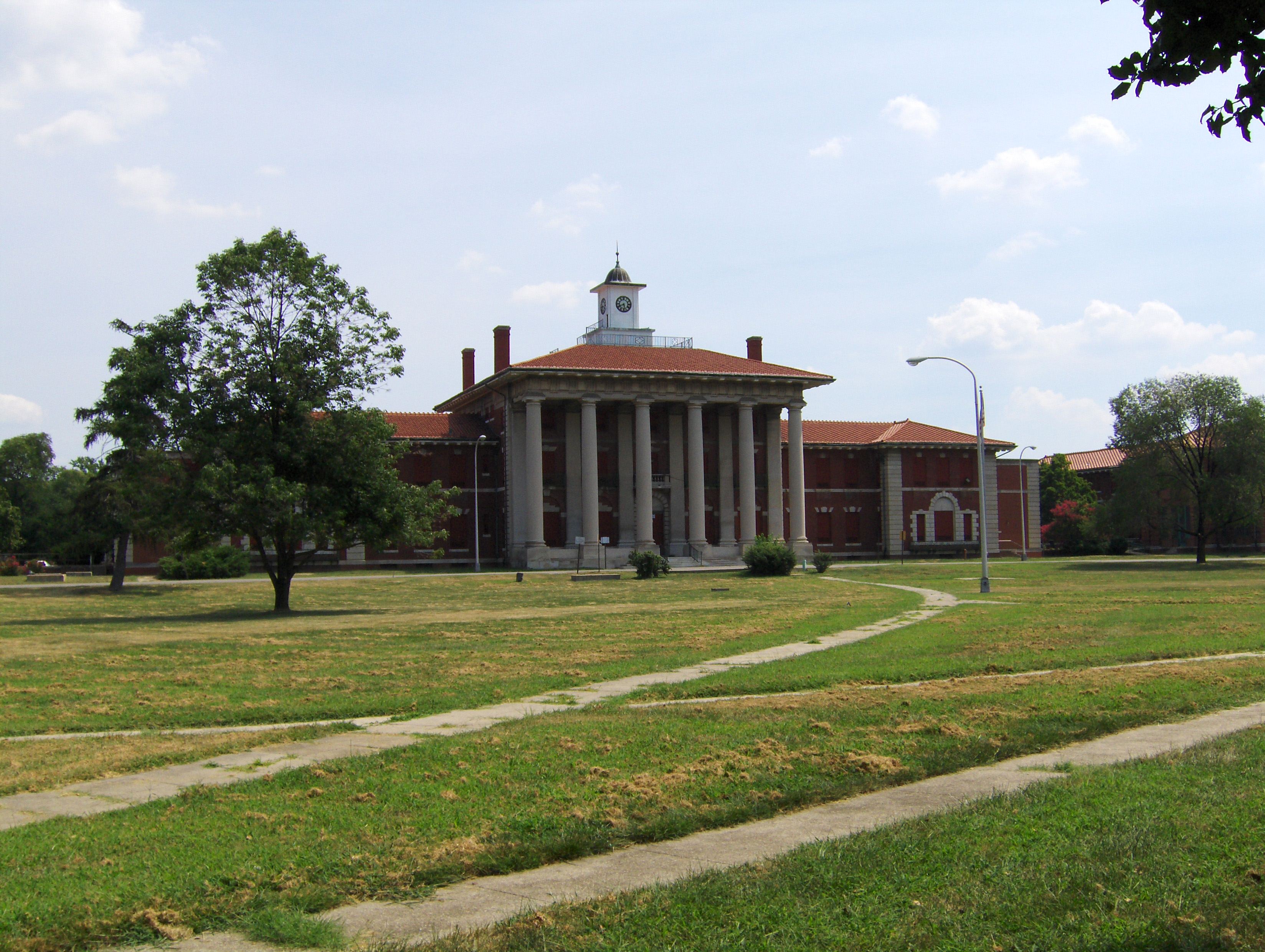
Saint Elizabeths Hospital, Washington, D.C. public psychiatric facility.

James Holmes was charged with 166 counts of murder, attempted murder and other related offenses from his July 20, 2012 shooting rampage in an Aurora, Colorado movie theater that left twelve dead and at least fifty-eight injured.  According to his attorneys, Holmes was in "the throes of a psychotic episode when he committed acts that resulted in the tragic loss of life."  With this admission and the District Court Judge's acceptance of Holmes’s plea of not guilty by reason of insanity, the scope of the trial was transformed from a determination of factual guilt to whether or not Holmes was sane, and thus culpable for his actions.  Insanity pleas have been around since ancient times, and the defense is based on the notion that some people with mental illnesses because of a lack of understanding or because of an inability to resist an urge are not culpable for their actions.  As the defense has developed through time, it has been inconsistently applied throughout the states.   


In Colorado, after an insanity plea is accepted, the defendant is ordered to be examined by an independent psychiatrist to determine his or her sanity.  In the case of Holmes, he was institutionalized in the Colorado Mental Health Institute in Pueblo where he was examined and is under constant supervision.  On September 6, 2013 the Court received the 128 page sanity report and copies were given to both the State and to Holmes's defense attorneys.  This report outlines the psychiatrist’s opinion of whether Holmes meets Colorado's legal definition of insanity, i.e. the inability to tell the difference between right and wrong because of a mental disease or defect, known as the M’Naughten rule.

The murder trial of James Holmes will begin sometime in 2014, and due to Holmes’s insanity plea, the government will have to prove beyond a reasonable doubt that Holmes was sane at the time of the shooting.[1]  Colorado is one of the eleven states that place the burden of proof in insanity defense cases on the State.  To compare, D.C. follows the Model Penal Code rule for the insanity defense; requiring that the defendant prove, by a preponderance of the evidence, that they were insane at the time of the crime.[2]  

Despite the fact that the State shoulders the burden, an insanity plea is not a get-out-of-jail-free card.  This is best evidenced by the microscopic number of insanity pleas that are filed in Colorado.  Recent numbers from the Colorado Judicial Branch show that defendants invoked the insanity defense in only 0.09% of all felony cases between 2001 and 2011, and the plea was successful only 28% of the time.  The scarcity of the pleas might be due to their inherent riskiness.  In Colorado, the plea requires the defendant’s full cooperation while he or she is subject to an independent psychiatric evaluation, and if the defendant does not cooperate, they are prohibited from introducing their own mental health experts to testify on their behalf, at trial or at a death-penalty hearing.  In this context, cooperation has its common and ordinary meaning, i.e. to cooperate means to “work or act together toward common end or purpose.”[3]  Generally, in cases where a defendant is non-compliant, the defendant has chosen to remain silent.  Additionally, not only is whatever was said to the psychiatrist admissible at trial, but the psychiatrist can comment on the defendant’s silence or non-compliance.[4]  This report is vastly important in determining the innocence or guilt of the party; as Michael Perlin, a New York Law School professor, has written in several papers, the final outcome in insanity cases matches the findings of the psychiatric reviews as often as 90% of the time.

As mentioned before, after an insanity plea is accepted, the focus of the trial changes because the defendant is admitting that he or she committed the crime or crimes, but that he or she should not be held legally responsible for their actions.  Because of the transformative nature of the plea, Washington D.C., like other states, has safeguarded a defendant’s right to, or not to, plead guilty by reason of insanity.  In D.C., this is called a Frendak inquiry.[5]  If there is a substantial question of the defendant’s sanity at the time of the crime, the trial court is required to determine whether, based on the defendant’s present mental capacity, he or she can intelligently and voluntarily waive the insanity defense.[6]  A pre-trial determination of competency does not preclude a Frendak inquiry if the defendant’s mental health at the time of the crime is called into question at any phase of the trial.[7]  The exact type and amount of evidence that will trigger the court’s obligation to conduct a Frendak inquiry is fact specific and will vary from case to case.  The goal of the inquiry is to ensure that the defendant knowingly is aware of the availability of the defense, and whether or not the defendant recognizes the advantages and disadvantages of the case.  If a defendant is found to have waived the defense knowingly and willingly, the court cannot impose the defense over the defendant’s objection.

The determination of whether or not to pursue this defense is something that must be weighed carefully; as mentioned above, when a defendant raises an insanity defense and is compelled to be examined, the defendant is basically waiving their Fifth Amendment privileges with regard to that psychiatric testimony.[8]  Additionally, those who are found guilty after raising the insanity defense generally serve significantly longer sentences than defendants convicted on similar charges who chose not to raise it.[9]  Further, even if the defendant is found not guilty by reason of insanity, they could be detained for a longer period than they would have been if they were found guilty.  This is because the defendant is committed to a mental facility until a time he or she is found to be sane; to put it in perspective, the average stay in St. Elizabeths is eight years.  As an attorney, it will sometimes make more sense to not try to raise the insanity defense in every minor case, because of the potential lengthy stay. 

Even though the latter two reasons listed above might not be applicable to Holmes, because he was looking at either life in prison or the death penalty, he still initially pled not guilty.  He was eventually allowed to change it to not guilty by reason of insanity, but the fact that it was not initially raised is telling of the complicated calculus that defense counsel has to take into account.  


Cyle Barber
Senior Editor, Criminal Law Practitioner


Picture by Tomf688 via Wikimedia Commons.


[1]Colo. Rev. Stat. § 16-8-105.5 (2013).
[2]D.C. Code § 24-50.
[3]People v. Dondurant, 296 P.3d 200, 209-11 (Colo. App. 2012).
[4] See Johnson v. People, 470 P.2d 37, 76 (Colo. 1970); People v. Tally, 7 P.3d 172, 175 (Colo. App. 1999); People v. Vialpando, 954 P.2d 617, 622 (Colo. App. 1997).  
[5] Frendak v. United States, 408 A.2d 364 (D.C. 1979).
[6] Id at 378.
[7] See Phenis v. United States, 909 A.2d 138, 159 (D.C. 2006) (finding that the defendant’s history of mental problems and his behavior at trial should have prompted the court to conduct a Frendak inquiry). 
[8] See United States v. Byers, 740 F.2d 1104, 1115 (D.C. 1984).
[9] Michael Perlin, Mental Disability Law: Civil and Criminal § 9C-3.

Friday, November 8, 2013

The Supreme Court Denies Appeal from Wrongfully Accused Duke Lacrosse Players


The Supreme Court refused to hear an appeal from three Duke Lacrosse players who were wrongfully accused of rape in March 2006.  David Evans, Collin Finnerty, and Reade Seligmann filed a lawsuit against the City of Durham, North Carolina, holding it responsible for pursuing the rape charges against them without probable cause.  The charges stemmed from false allegations made by Crystal Mangum, a stripper hired to perform at a team party held on March 13, 2006.  Without any evidentiary basis, Evans, Finnerty, and Seligmann were indicted for Mangum’s alleged rape.[1]  The Supreme Court’s recent refusal to hear their appeal marks the end of the players’ civil rights lawsuit.  Consequently, the Court’s refusal leaves many unanswered questions about the prosecutorial and police misconduct that occurred during the case.


Michael Nifong was the Durham District Attorney behind the unjust prosecution of Evans, Finnerty, and Seligmann.  Around the same time that Crystal Mangum’s rape allegations surfaced, Nifong was facing the pressures of re-election.  In order to win, Nifong desperately needed the votes of Durham’s black community, who were outraged by Mangum’s story.  Nifong saw the rape case as the perfect opportunity to win their votes, and he quickly made it the center of his campaign.[2]  With a clear motive compelling him, Nifong began a ruthless attack on the lacrosse players, indifferent to the truth.

Nifong blatantly violated his ethical obligations as a prosecutor throughout the case.  First, there was no probable cause to charge the lacrosse players with rape, since evidence supporting Crystal Mangum’s story was almost non-existent.  The Supreme Court defines probable cause as “…a reasonable ground for belief of guilt.”  In the Duke case, there was no DNA or other physical evidence linking the defendants to the victim, and the sole basis of Mangum’s claims were her inconsistent versions of events, which changed multiple times.[3]  This evidence was insufficient to establish a reasonable belief that the players were guilty, but Nifong pursued the case anyway.

Nifong also violated his Brady obligation, which precludes a prosecutor from withholding exculpatory evidence from the defense that is material to the outcome of the case.  Not only did Nifong withhold evidence that showed Mangum’s inconsistencies in identifying her rapists, but he also withheld DNA results that revealed no match of any lacrosse player in or around Mangum hours after the alleged rape.[4]  In both instances, the evidence withheld was material to the outcome of the case.  Mangum’s inconsistencies seriously undermined her credibility, and the DNA results were almost conclusive proof of the players’ innocence.  Nifong also made extrajudicial statements to the public proclaiming the lacrosse players’ guilt, even though he knew the facts did not support the claim.  Based on Nifong’s repeated misconduct, he clearly had no interest in presenting the truth and pursuing justice.

The Duke Lacrosse case illustrates prosecutorial misconduct at its worst.  Nifong had tremendous power over the lives of the accused as the elected District Attorney, since no one was going to challenge his discretion.   Instead of using his power to seek justice, he abused it to further his own motives.  Fortunately, Nifong’s misconduct was exposed, and Evans, Finnerty, and Seligmann were declared innocent.  Accordingly, Nifong was disbarred and disgraced by the legal community.  However in many cases, prosecutorial misconduct is never exposed, probably because it happens behind closed doors.  Most of the time, defense attorneys are unaware the misconduct is going on, especially with regards to Brady violations.  A possible solution to this problem could be mandatory “open discovery laws” in all jurisdictions, which would require prosecutors to turn over all evidence in their case files to the defense.  

Another concern regarding prosecutorial misconduct is the fact that it is often intertwined with police misconduct.  Clearly, Nifong did not act alone during the Duke case.  Durham police officers and investigators directly contributed to the injustices of this case.  However, many of their identities are still unknown, as well as certain details of their scheme.  Sadly, the Supreme Court’s dismissal of the players’ civil lawsuit means many of these facts will remain unknown.


Samantha Beyda
Senior Staffer, Criminal Law Practitioner


Image by Ravs62687 at the English Wikipedia [Public domain], via Wikimedia Commons.


[1] Stuart Taylor Jr. & K.C. Johnson, Until Proven Innocent: Political Correctness and the Shameful Injustices of the Duke Lacrosse Rape Case 96-97 (St. Martin’s Press, 1st ed. 2008). 
[2] Id. at 84-85.
[3] Id. at 36-38. 
[4] Id. at 162-163. 


Tuesday, November 5, 2013

A Refusal of Recusal


The color black is made through a combination of all primary colors.  It is often believed to represent authority and power.  Black is an appropriate color for judicial robes because judges wield considerable power, and their judgments, much like the color itself, are made through a combination of all factors.  A judge’s ability to remain impartial through the course of criminal litigation became the center of the Aaron Hernandez case.

NFL star Aaron Hernandez is charged with one count of first-degree murder and five counts of weapon possession.  These charges stem from the June 17, 2013 killing of Odin Lloyd.  Sports Court Media, a trusted provider of sport and legal analysis founded by Tamara Holder and Linda Baden, reported that on his last court appearance, prosecutor William McCauley demanded that Bristol County Superior Court Judge, Susan Garsh recuse herself from the case.  McCauley cites a long antagonistic history with Judge Garsh as the basis for his request for recusal.  He believes that Judge Garsh would be unfriendly to the prosecution’s case.  Judge Garsh’s recusal would have brought the trial and all pretrial matters under the control of a different judge.  However, Judge Garsh stated that she harbored no ill will or bias, and was not partial towards the Commonwealth or defendant.  This case presents an opportunity to explore the rules and guidelines for judicial recusal, and the options available to the prosecution when a request for recusal is denied.


Sections 47, 144, and 455, under Title 28 of the United States Code lists the factors that are taken into consideration for judicial recusal.  Section 144 applies exclusively to district court judges and operates on the standard of personal bias or prejudice.  Under §144 a judge only needs to consider whether the allegations are sufficient to demonstrate bias if one assumes the allegations to be true.  A plain reading of § 144 would suggest that obtaining a grant of recusal was a simple endeavor.  However, § 144 has been criticized for having a loose interpretation regarding its procedural requirements.  Consequently, this makes §144 more difficult to use than § 455.

Section 455 is more thorough, and is the most detailed of the three sections. The first part of § 455states that any justice, judge, or magistrate judge of the United States shall disqualify himself in any proceeding where his impartiality might reasonably be questioned.  It functions as a wide net provision to prevent improper case participation.  The second part of § 455 lists additional circumstances that require a judge’s recusal.  These circumstances include (1) harboring personal bias or prejudice concerning a party, (2) possessing personal knowledge of disputed evidentiary facts concerning the proceedings, being lawyer in or material witness to the matter in controversy, (3) serving as counsel, an adviser, or material witness while under governmental employment, (4) knowing that he, his spouse or minor child has a financial or substantial interest in the outcome of the proceeding, (5) having a spouse or close relative that is a party to the proceeding.

Lastly, § 47 under Title 28 of U.S.C. requires that an appellate judge recuse herself when she is scheduled to preside over a case on appeal that has already been previously decided by her.

While the Heranadez case is not currently on appeal, prosecutor William McCauley’s request for recusal seems to fall squarely into that first circumstance listed in the second part of § 455.  However, Judge Garsh did not grant McCauley’s request.  Judges have the power to make the decision despite being affected by the outcome.  With this amount of power, how should a party proceed when they disagree with a judge’s decision?  Although the prosecution stated that they would not pursue an appeal of the decision, some jurisdictions have adopted rules to address such concerns.  For instance, Oklahoma adopted a rule that provides an aggrieved party with an alternative to the challenged judge deciding the motion to disqualify.  The initial decision upon a motion to recuse is still within the discretion of the challenged judge.  However, upon refusal of a judge to grant the recusal motion, an interested party may re-present the motion to the Chief Judge.  If the Chief Judge chooses to uphold the refusal, the aggrieved party may institute a proceeding with an appellate court.  However, this course of action may be time consuming and expensive.

Though judicial robes are black, an approach to recusal decisions should be as well.  Judges are required to perform acts of introspection that address the multiple factors governing impartiality because it is a judge’s neutrality that provides the pillar on which the public’s faith in the justice system rests.  Judge Garsh appears to have done so.  Had she not, perhaps Massachusetts would benefit from an Oklahoma styled approach to recusal grievances.


Stephane L. Plantin
Junior Staffer, Criminal Law Practitioner


Photo from Wikimedia Commons.

Friday, November 1, 2013

Checking Your Phone While Driving? Hopefully You Don’t Mind The Police Taking a Look


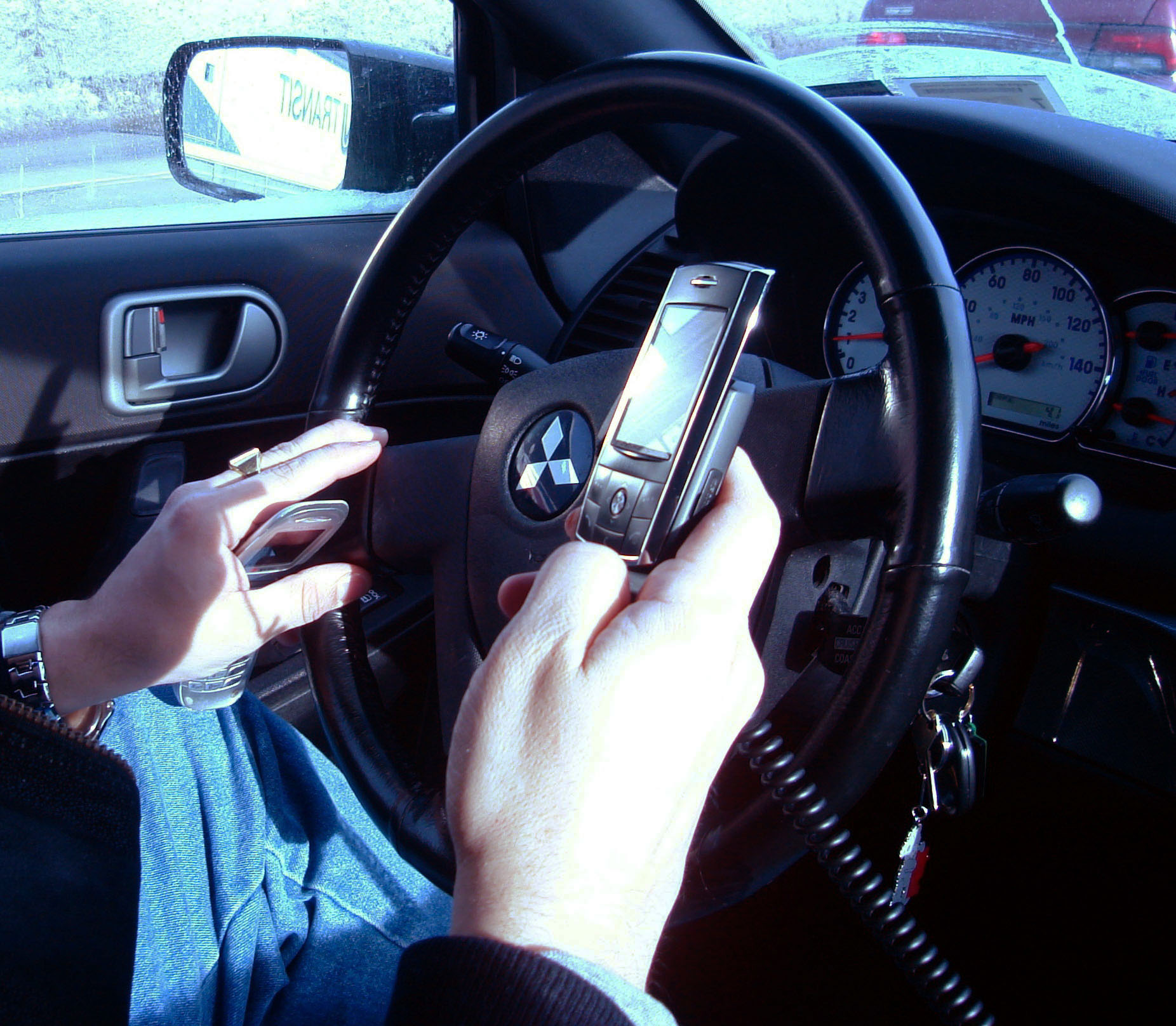
In an age where more and more personal and private information is being stored on cellphones, an interesting question of law arises concerning the degree of protection such information is afforded during the course of a search by police when a driver is stopped.   This information, traditionally comprised of simple data such as the person you called or texted and the content of that message, now includes, thanks to the development of smartphones, GPS location history, web browser history, pictures (in some cases intimate or explicit), and recent email traffic.  This broad array of personal information makes the search of a cell phone a much more onerous and invasive procedure than it might have been in past ages of “dumb” phones.  While the aggregation and nature of personal content stored on cell phones has increased, so too has the technology available to search this data.   For example, in 2011 Michigan state law enforcement acquired a piece of technology known as CelleBrite UFED, a device capable of grabbing all photos and video from an iPhone within a minute and a half.  In addition to such speed, the device is also compatible with 3000 different phone models, and even has the capability to defeat password protection.  All of this capacity from a device incorporated in 2011. 

Assuming that collection technology has matched the progress of communicative technology, the technology employed by law enforcement today is likely to be able to collect far more data than mere pictures and video, and is likely capable of defeating even some of the more advanced forms of data encryption.  This assumption of data collection technology does not appear farfetched, especially given the recent release of only a small snapshot of the technology currently in use by government agencies, such as the NSA.  With these concerns in mind, the question arises as to what protections the Fourth Amendment provides to ensure that such vast and invasive technologies are not unduly applied during an interaction with police. 

The root concern regarding the limits on the use of such technologies by police, at least as interpreted by the California Court of Appeals, the Ohio Supreme Court, and the Department of Justice, derives from the Supreme Court’s holding in Arizona v. Gant.  In this case, the Court held that when a crime is uniquely related to an offense involving an automobile, that a warrantless search may be conducted of the contents of the vehicle if there is reason to believe that evidence pertinent to the crime is located there.  For offenses such as drunk driving, selling drugs, and illegal weapons trafficking, such a search might seem reasonable to search for alcohol, drugs, or guns.  However, as more and more states enact law relating to the minor offense of texting while driving, it would appear that the rule from Gant would permit an officer to search the contents of a vehicle for evidence related to that crime, evidence that almost certainly will be located on a suspect’s cell phone.  Unless a suspect gives consent for the phone to be searched by police, it is likely that a data collection tool such as the CelleBrite UFED could be used by officers to extract such data.  Even if consent is given, based on the ease of deleting messages, police might still elect to employ such technology to search for any deleted messages.  Based on the case law surrounding the search of cell phones by police during the course of a stop or arrest it seems reasonable to assume that police, given their broad authority to conduct warrantless searches under Gant, and the technology that is currently at their disposal, have and will use these tools to gather data from a suspect’s phone. 

In the context of texting while driving, while the information gathered from a cell phone search is likely to reveal the guilt or innocence of a suspect regarding this offense, such information may also, and more importantly, reveal evidence of other unrelated crimes.  Since the additional information was legally obtained under an exception to the warrant requirement of the Fourth Amendment, this additional information could be used to prosecute and convict a suspect for other crimes, completely separate from those related to the initial stop.  This was the situation in People v. Nottoli.  In this case, officers pulled Nottoli over under suspicion of driving under the influence.  While taking an inventory of the car before impound, police conducted a search, which produced a fully legal Glock 20 pistol and a Blackberry smartphone.  Because the cell phone was in the car and could potentially reveal evidence of impaired driving, the police proceeded to conduct a warrantless search of the phone’s text messages, emails, and photographs during which they found pictures of Nottoli holding two AR-15 rifles.  This photograph was ultimately used as evidence to secure a warrant to search Nottoli’s home for evidence of possible gun related crimes, the search of which produced illegal weapons and marijuana.  While the information obtained from the cell phone was suppressed by the lower court, the California Court of Appeals reversedand upheld the warrantless search of the cell phone under Gant, stating that the police had the authority to search the passenger compartment for any evidence reasonably related to the offense, including the cell phone.  In contrast, other courts have taken a more restrictive approach to the search of cell phones, including the Ohio Supreme Court.   In State v. Smith, the Ohio Supreme Court held the warrantless search of a cell phone is more akin to that of a laptop than a bag or container, and was therefore afforded more stringent protections.  This distinction was grounded on the larger information storage capacity of a cell phone compared to that of an ordinary container.  

These state cases, along with several federal cases, have produced a large split regarding the treatment of cell phone searches.  Given this large split, the protections afforded cell phones during a police search seem to be a prime topic for the Supreme Court to weigh in on.  This realization has not gone unnoticed, as this issue has reached even the ears of the highest levels of government, in particular the Department of Justice.  However, while one might assume that the DOJ has an interest in protecting the privacy interests of citizens under the Fourth Amendment, in an August 2013 petition filed by the DOJ to the Supreme Court regarding the case of United States v. Wurie, this is decidedly not the case.  Instead, the DOJ contends that in the context of a warrantless search conducted under Gant, a cell phone is no different than any other container lawfully searched by police without a warrant and deserves no special protection.  With petitions being made from the highest levels of government, and the already divergent treatment in both state and federal circuit courts, the issue of cell phone searches by police is certainly one to follow in the near future.  Until such time as we can be assured of the protection afforded our cell phone data, it would be wise to take extra care when using your cell phone while driving.


Dave Zylka
Senior Staffer, Criminal Law Practitioner


Image by Ed Poor from Wikimedia Commons.