 In November 2012, the local police department for the small town of Keene, New Hampshire announced the acquisition of a ballistic-engineered armored response counter attack truck, more affectionately called a “BearCat,” from the Department of Homeland Security (DHS). Meanwhile, local police in the small town of Cary, North Carolina taught a training course entitled “Warrior Mindset” to its incoming class of officers. In February 2013, a New Haven Police Department Special Weapons and Tactics (SWAT) team used a battering ram through a single family’s front door, shooting a flash-bang grenade to temporarily blind the family while it executed a search warrant for drugs. No drugs were found.

Tuesday, August 19, 2014
The Soldier Department
In November 2012, the local police department for the small town of Keene, New Hampshire announced the acquisition of a ballistic-engineered armored response counter attack truck, more affectionately called a “BearCat,” from the Department of Homeland Security (DHS). Meanwhile, local police in the small town of Cary, North Carolina taught a training course entitled “Warrior Mindset” to its incoming class of officers. In February 2013, a New Haven Police Department Special Weapons and Tactics (SWAT) team used a battering ram through a single family’s front door, shooting a flash-bang grenade to temporarily blind the family while it executed a search warrant for drugs. No drugs were found.
Monday, August 11, 2014
Stand Your Ground: Renisha McBride, Trayvon Martin, and the Law of Self-Defense
Both parties agreed to the facts. On November 2, 2013, at 4:30am in Dearborn Heights, Michigan, Theodore Wafer shot and killed Renisha McBride, an unarmed 19 year-old woman who had been pounding on the front door to his house. The case was quickly thrust into the public spotlight, spawning coverage from numerous news sources and even its own Wikipedia page. The ensuing two-week trial ended last Thursday when, after two days of deliberation, the jury returned a guilty verdict, convicting Wafer of second-degree murder, involuntary manslaughter, and a felony firearm-related offense.
Tuesday, August 5, 2014
From Click to Clank: Social Media and Criminal Investigations
 The gift and curse of technology advancement has made its way into the criminal justice system. In a generation where almost nothing is left private, social media sites have created a new frontier of evidence for criminal investigations. Justin P. Murphy and Adrian Fontecilla of Crowell & Moring’s Washington, D.C. office took an in-depth look at social media evidence in criminal proceedings. A Bloomberg Law report that summarizes their larger study and law review article reports some remarkable statistics: “Social media use in the United States alone has increased by 356 percent since 2006. Currently, 52 percent of Americans have at least one social media profile, more than one billion people use Facebook actively each month and Twitter has over 140 million active users posting 340 million Tweets a day.”
Tuesday, July 29, 2014
Supreme Court Watch Case Update: Navarette v. California: Corroborating Anonymous Tips in Regards to Drunk Driving
UPDATED SECTIONS: SUPREME COURT AND PRACTITIONERS
Docket Number: 12-9490
Argument Date: January 21, 2014
ISSUE:
Whether the Fourth Amendment mandates an officer to corroborate an anonymous tip about a drunk or reckless driver before stopping the vehicle.
FACTS:
On March 28, 2000, the Court ruled in Florida v. J.L. that an anonymous tip identifying a man at a bus stop as having a gun did not justify a stop and frisk without some independent corroboration of the tip. The Court, however, did not answer whether an anonymous tip that alleges great danger justifies a search where the tip was uncorroborated. Although the Court said that allegations of a person carrying a bomb do not need to be corroborated before a search, this was mere dictum, failing to resolve the issue about drunk driving, which is at issue in the present case.
In Navarette v. California, the California Highway Patrol dispatchers received an anonymous telephone call alleging that a silver Ford F150 pickup truck ran the caller off the highway. The anonymous caller also provided the car’s license plate number and the direction the car was driving on the highway. This information was broadcasted to law enforcement and soon after two officers spotted the car. While following the car, the officers did not witness any reckless driving, but stopped the vehicle nonetheless. During the stop, after smelling marijuana, the officers searched the car and found four large bags of the illegal substance. The officers proceeded to arrest the driver Lorenzo Navarette, and his passenger Jose Navarette. Both men tried unsuccessfully to suppress the evidence of marijuana and ultimately pled guilty to transportation of marijuana.
The Navarette brothers are now appealing their convictions on Fourth Amendment grounds. The appeal is based on precedent stating that anonymous tips, alone, are insufficient to justify a search or seizure. Since anonymous tips are inherently unreliable, officers are required to corroborate the information before conducting the search or seizure.
This case turns on whether there should be a “drunk or reckless driver exception” to the corroboration requirement of anonymous tips. Since the Supreme Court decision in Florida v. J.L. did not address this issue, there is a split among the lower courts on deciding whether anonymous tips alleging drunk or reckless driving should be corroborated by police investigation before stopping a vehicle. For example, the Eight Circuit upheld a vehicle stop even though the anonymous tip was not corroborated, reasoning that reckless driving is similar to a bomb-like danger that the Supreme Court referenced. However, in Harris v. Commonwealth, the Virginia Supreme Court held that an anonymous tip about drunk driving did not justify a vehicle stop because the officer was unable to corroborate drunken or erratic driving despite having an opportunity to observe the driver before stopping the vehicle. Due to this split, depending on where you are in the country, an officer can stop an alleged drunk driver based on an uncorroborated anonymous tip.
PETITIONER’S ARGUMENT:
The uncertainty of whether an officer needs to corroborate a drunk and reckless driving tip is part of the Navarette brothers’ argument. They argue that the Court should resolve this issue and rule that anonymous tips in regard to drunk or reckless driving should be corroborated to provide the requisite reasonable suspicion to justify a stop. Since there was no corroboration in this case, the Supreme Court should reverse their convictions because precedent dictates that anonymous tips should be corroborated.
RESPONDENT’S ARGUMENT:
On the other side, the Californian government believes that the officers complied with the narrow holding of Florida v. J.L., namely that that case was limited to an anonymous report of a nonthreatening possessory offense. California’s contention is supported by other jurisdictions that have interpreted Florida v. J.L. as providing a balancing act, that “the need for corroboration of illegal conduct identified by the anonymous tipster is offset by the inherent danger of the conduct itself and the overall reliability of the tip.” For these jurisdictions the “conduct” is drunk driving.
UPDATE, SUPREME COURT:
UPDATE, PRACTITIONERS:
On April 22, 2014, the United States Supreme Court rendered an opinion in Navarette v. California. Justice Thomas, writing for the majority, upheld the California Court of Appeals decision holding that conducting the traffic stop complied with the Fourth Amendment. The stop, based on the facts of this case, complied with Fourth Amendment because under the totality of the circumstances, the officer had reasonable suspicion to stop the car, believing the driver was intoxicated.
The Court reached its decision by first analyzing its Fourth Amendment jurisprudence and seeing how the facts of this case fit into the established case law. In order to conduct a traffic stop, an officer needs “reasonable suspicion,” which is dependent on both the quality of the information and its degree of reliability. Reasonable suspicion requires less than probable cause and less than a preponderance of the evidence.
Reasonable suspicion to conduct a traffic stop applies in the context of anonymous tips given to the police. Anonymous tips alone are rarely held to rise to the level of reasonable suspicion. However, under certain circumstances, the Court said that some anonymous tips can be sufficiently reliable to make a Terry stop. One such circumstance was found in Alabama v. White, where the Court held that the anonymous tip given to the police held enough predictive information to imply that the tipster was familiar with the driver’s activities and had reliable access to information in the driver’s illegal activities. But, an anonymous tip saying that a man in a plaid shirt at a bus stop was carrying a gun, was not enough to give officers reasonable suspicion.
By looking at these two cases, the Court held that the 911 phone call was sufficiently reliable to conduct the traffic stop. The Court found that the anonymous tip was reliable because it was akin to eyewitness testimony, that the time span between the incident and the phone call was indicates that the caller made the call right after the caller was run off the road, and the use of the 911 emergency system. The caller used “explicit and detailed description” of the wrongdoing along with descriptive indicators of the car. In looking at the time frame between the time of the incident and the time the 911 call was made, the Court held that the tip was reliable because it was contemporaneous. Looking to the law of evidence, Justice Thomas compared this to the present sense impression and excited utterance hearsay exceptions. Finally, in looking at the fact that the caller used the 911 emergency system, the Court held that because these calls can be recorded, traced, and the caller can be identified, it justified the officer’s reliance of the anonymous tip.
After reaching the decision that the call was reliable to create reasonable suspicion that “criminal activity may be afoot,” the Court looked to see if it created reasonable suspicion to think that drunk driving was occurring. The Court held that it was based on the objectively reasonable viewpoint of a police officer and the allegations made by the caller.
Justice Scalia, along with three other Justices dissented, saying that he would reverse the California Court of Appeals. He reasoned that the police officers knew nothing about the tipster and argued that the hearsay exceptions were an inappropriate analogy. Furthermore, Justice Scalia challenged the reasoning about the 911 emergency systems’ ability to identify callers because an average anonymous caller may not know about this capability and we do not know if this particular caller knew about it. Finally, Justice Scalia held that the officers, per their own observations, had good reason to believe that the driver was not drunk since the driver was not driving recklessly or in any manner to suggest that he was drunk.
UPDATE, PRACTITIONERS:
The Court here did not carve out a Fourth Amendment exception for drunk driving. Rather, the Court limited their opinion to the facts of this case and analyzed it based on existing case law. While on the one hand it appears that the Court maintained the status quo in regards to anonymous tips, it has in some sense lowered the strict anonymous tips alone are not enough to establish reasonable suspicion bar. In a very similar or identical future fact pattern, a police officer will need less evidence to conduct a traffic stop.
Written by Cassandre Plantin
Staffer, Criminal Law Practitioner
Staffer, Criminal Law Practitioner
Tuesday, July 22, 2014
The Trend to Disregard Immigration Detainers
 Immigration detention is a topic of growing concern to Americans because of the current surge in undocumented immigrants coming to and residing in the United States. National news coverage is full of stories about the dilemma of having too many detainees and not enough beds. Undocumented immigrants can be put in detention while they are waiting for their cases to be heard. This is true for people who come to the border and ask for asylum, as well as hardened criminals who are in deportation proceedings because of their criminal convictions. The numbers are increasing, and finding resources to keep up is proving difficult.
Tuesday, July 15, 2014
Privileges vs. Rights in a Defendant’s Struggle to “Prove” Innocence

Evidentiary privileges purport to safeguard
interests and relationships. They arise
from the rules of evidence and can bar certain pieces of evidence from being
used in a trial or other judicial proceedings.
The most common and well-known privilege is the attorney-client privilege
where an attorney cannot testify to the relationship between him and his
client, encouraging an open and honest dialogue with clients and their
attorneys. Another example of these
privileges is the marital privilege where, in the interest of keeping the
marriage tranquil and conflict-free, a husband cannot testify against his wife
and vice versa (although the intricacies of how exactly this works varies from
jurisdiction to jurisdiction). In
general, these privileges can help defendants exclude evidence arising from
relationships where society has deemed communications to be private. Understandably, these forms of evidence
should be excluded at judicial proceedings, but what happens in a jurisdiction where
these privileges exclude evidence that could help, or even exculpate, a defendant? Doesn’t that defendant have the right to a
fair trial and due process under the Sixth Amendment? Can privileges created
under evidentiary rules really circumvent a defendant’s constitutional rights?
Tuesday, July 8, 2014
3D Gun Printing: The End of Gun Control in the United States?
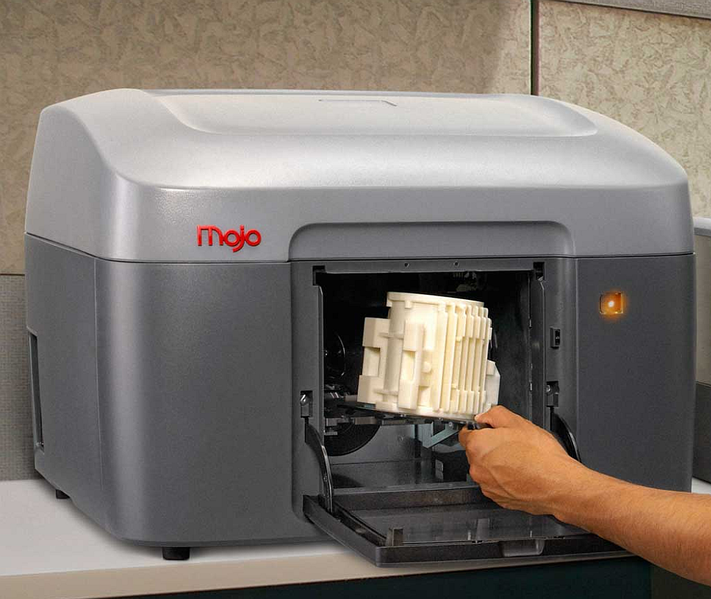 The recent shootings at the University
of California, Santa Barbara and in Las
Vegas have brought about the age-old question of gun control in the United
States. While the Second Amendment of
the United States Constitution has its supporters and critics, the federal
government has enacted regulations
intent on securing the safety of society by requiring citizens who purchase
firearms to register them and hold the necessary licensure. However, recent events are changing how we
obtain weapons. What if citizens did not
need a license to purchase a firearm at a store, but could instead acquire them
with just a computer, a block of plastic, and a 3D printer?
Tuesday, July 1, 2014
PREA in Action: Eliminating Prison Rape

Despite the prevalence of jokes about it in the
media and society at large, prison rape is no laughing matter. As many as 4% of state and federal prison inmates,
3.2% of jail inmates, and 1.8% of juveniles ages 16 to 17 have reported sexual
victimization by another inmate or facility staff in recent reports. From the assaults, the inmates have
reported not only physical abuse but also mental abuse, often at the hands
of prison guards who took advantage of their positions of power to engage in
sexual activity with inmates. As a
result, with millions currently incarcerated, hundreds of thousands of American
citizens have entered the criminal justice system to serve their time, only to
become victims themselves. Often a
population that is overlooked, a large portion of the population believes that
a prisoner is just a prisoner, and there is almost a tacit consent to sexual
misconduct in prisons where
people view prison rape as inherent to jail time. Fortunately, in the interest of preserving human
rights, civil liberties, and a constitutional commitment to preventing cruel
and unusual punishment, in 2003 the United States passed the Prison Rape
Elimination Act (PREA) to address the rights of a population often overlooked.
With this effort on behalf of the government, one question remains: is it enough?
Subscribe to:
Posts (Atom)