Prosecutors may often be confronted with a complex moral dilemma when pursuing cases against first-time offenders. Namely, does every first-time offender, whose past offers little or no indication that she may commit a future crime, deserve to have a permanent felony on his or her record and face possible jail time?

Tuesday, September 9, 2014

Friday, September 5, 2014
Coping: Stress and Critical Incidents in the Legal Profession

With
such a high level of stress already engrained into the profession, it’s hard to
imagine how attorneys in the criminal field, whether they be law enforcement
lawyers or the inspector general, handle the added stress and trauma that comes
with being present at crime scenes and other critical incidents. Most police
departments and law enforcement agencies have built in Critical
Incident Stress Management programs that assist officers and first
responders with the after effects of seeing traumatic accidents and crimes
first-hand. The U.S Department of Health and Services defines a critical incident as a
traumatic event that an individual is unable to readily cope with, such as a
worksite shooting or a co-worker suicide. However, these sorts of events are
classified as separate from “catastrophic incidents,” which are occurrences
like bomb explosions and hostage situations.
In
the law enforcement field, employees constantly come in contact with critical
incidents, as they handle everything from traffic accidents to mass murders. In
considering the types of trauma that these individuals experience, it is also
important to remember that lawyers are present at many of these scenes or at
least have access to the horrific details. Prosecutors, defense attorneys, attorneys
involved in police oversight, and law enforcement lawyers all at one time or
another will come in contact with gruesome and harrowing situations, regardless
of their client’s involvement. Crime scene photos, victim interviews, and the
trauma of seeing a gory traffic accident first hand can all have a detrimental
effect on any individual, even if that individual is not aware of those
effects. This constant barrage is known as psychic battering
and can include a wide range factors: a victim’s description of a rape; a
vicious custody battle; crime scene photos from a triple murder. Although it
may not be initially clear, a consistent exposure to such material, even if it
is only vicarious, can have lasting damaging effects. It is often considered
the job of the lawyer or attorney to remain detached and not invested in the
details of each specific case; they are meant to strive for excellence on a
professional level, but to not commit to any particular client on a personal
level. Unfortunately, no one can predict the way a particular situation will
affect them, and even the most seasoned attorneys can find themselves jarred by
a particularly upsetting situation.
With
the number of high-stress tragedies that are occurring on a day-to-day basis in
the U.S. today, including the number of shootings that have happened recently,
it is important for members of the legal profession to have resources available
if the need for outreach arises. The American Bar Association includes the Commission
on Lawyer Assistance, which services lawyers struggling with alcohol abuse,
drug addiction, and depression. It also sponsors a National Mental Health Day,
which focuses on ensuring that both licensed attorneys and law students
understand that there are support systems available to help them cope with the
pressures of the legal profession. Every state bar has its own form of support
group; New York City has its own Lawyer
Assistance Program with a confidential helpline, while the D.C.
Bar program offers counseling and sessions with volunteers that have
experienced the same problems. Many of these Lawyer Assistance Programs also
offer continued monitoring to ensure that individuals are not benefitting from
the help that they are receiving. However, although these initiatives focus on
generalized, work related stress, perhaps there should be more focus for
lawyers that are present at crime scenes and handling disturbing material on a
daily basis. Although the Department of
Justice has a plan of action for critical incidents, the plan makes no
mention of how to handle the psychological and emotional after-effects of such
occurrences. Considering the amount of
discourse that has occurred about the mental
health of lawyers in general, it is surprising that there has not been more
discussion on how these individuals are dealing with the effects of critical
incident stress. It would be disingenuous to imply that attorneys interact with
such incidents on the same level as law enforcement officers; however, it cannot
be denied that lawyers have to cope with these situations in some manner and
that they should be afforded the resources to do so.
Jacqueline Morley
Staffer, Criminal Law Practitioner
Tuesday, September 2, 2014
The Defense of Justification: An Analysis of the Case Against Darren Wilson
 As news spreads of the shooting of Michael Brown by Darren Wilson, many have already begun to speculate as to the result. Some say Wilson will go to jail murdering a boy in cold blood, and others say he was justified in defending himself and should not face jail time for doing his job. Although the facts of the case are not crystal clear, it is important to view the facts and apply the law in as unbiased a manner as possible. An analysis of the relevant statutes and possible facts of the case follows.
Friday, August 29, 2014
Weakening the Shield: Maryland Reforming Sex Offender Registry Laws for the Worse?
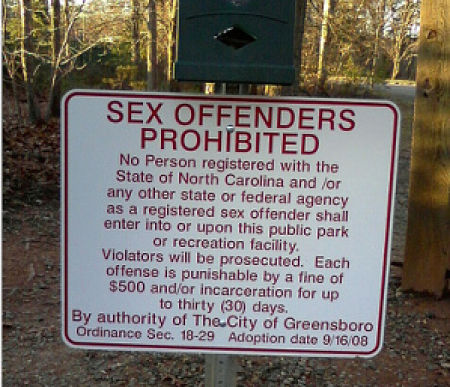 The sex offender registry has long been a system relied upon by the government to keep track of the residence and activities of sex offenders, including ones who have completed their court-ordered sentences. It is also a shield designed to protect the public; however, the shield could soon be weakened when at least 1,200 names disappear from the State of Maryland’s registry.
Tuesday, August 26, 2014
Judicial Economy Overstepping? Maryland's Lack of Recognition of Antagonistic Defenses
 It is embedded in our judicial system within the Fifth and Sixth Amendments of the United States Constitution that a person in a criminal proceeding is entitled to have a fair trial with all of his or her due process protections. Stemming from these constitutional provisions, Maryland recognizes in Sessoms v. State the right to “ensure that an accused gets a fair trial free from undue prejudice.” Although Sessoms is speaking directly to other crimes’ evidence, that same fairness is applied throughout the criminal justice system.
Tuesday, August 19, 2014
The Soldier Department
 In November 2012, the local police department for the small town of Keene, New Hampshire announced the acquisition of a ballistic-engineered armored response counter attack truck, more affectionately called a “BearCat,” from the Department of Homeland Security (DHS). Meanwhile, local police in the small town of Cary, North Carolina taught a training course entitled “Warrior Mindset” to its incoming class of officers. In February 2013, a New Haven Police Department Special Weapons and Tactics (SWAT) team used a battering ram through a single family’s front door, shooting a flash-bang grenade to temporarily blind the family while it executed a search warrant for drugs. No drugs were found.
Monday, August 11, 2014
Stand Your Ground: Renisha McBride, Trayvon Martin, and the Law of Self-Defense
Both parties agreed to the facts. On November 2, 2013, at 4:30am in Dearborn Heights, Michigan, Theodore Wafer shot and killed Renisha McBride, an unarmed 19 year-old woman who had been pounding on the front door to his house. The case was quickly thrust into the public spotlight, spawning coverage from numerous news sources and even its own Wikipedia page. The ensuing two-week trial ended last Thursday when, after two days of deliberation, the jury returned a guilty verdict, convicting Wafer of second-degree murder, involuntary manslaughter, and a felony firearm-related offense.
Tuesday, August 5, 2014
From Click to Clank: Social Media and Criminal Investigations
 The gift and curse of technology advancement has made its way into the criminal justice system. In a generation where almost nothing is left private, social media sites have created a new frontier of evidence for criminal investigations. Justin P. Murphy and Adrian Fontecilla of Crowell & Moring’s Washington, D.C. office took an in-depth look at social media evidence in criminal proceedings. A Bloomberg Law report that summarizes their larger study and law review article reports some remarkable statistics: “Social media use in the United States alone has increased by 356 percent since 2006. Currently, 52 percent of Americans have at least one social media profile, more than one billion people use Facebook actively each month and Twitter has over 140 million active users posting 340 million Tweets a day.”
Subscribe to:
Posts (Atom)