In October of last year, I wrote “Buccal Swab ‘Booking Procedures’: Lower Courts Struggle to Apply Maryland v. King,” a blog post outlining some potential problems with the reasoning in Maryland v. King, the landmark DNA collection case handed down by the Supreme Court last June. At the time, I focused on federal district court interpretations of King, but appeals courts have also begun ruling on these cases. On March 20, 2014, the Ninth Circuit, sitting en banc, issued an opinion in Haskell v. Harris upholding California’s broad DNA Collection Act.

Showing posts with label DNA. Show all posts
Showing posts with label DNA. Show all posts
Friday, April 4, 2014
All Felonies are Serious Offenses: Ninth Circuit Upholds California DNA Collection Law
In October of last year, I wrote “Buccal Swab ‘Booking Procedures’: Lower Courts Struggle to Apply Maryland v. King,” a blog post outlining some potential problems with the reasoning in Maryland v. King, the landmark DNA collection case handed down by the Supreme Court last June. At the time, I focused on federal district court interpretations of King, but appeals courts have also begun ruling on these cases. On March 20, 2014, the Ninth Circuit, sitting en banc, issued an opinion in Haskell v. Harris upholding California’s broad DNA Collection Act.

Tuesday, October 22, 2013
Buccal Swab "Booking Procedures": Lower Courts Struggle to Apply Maryland v. King
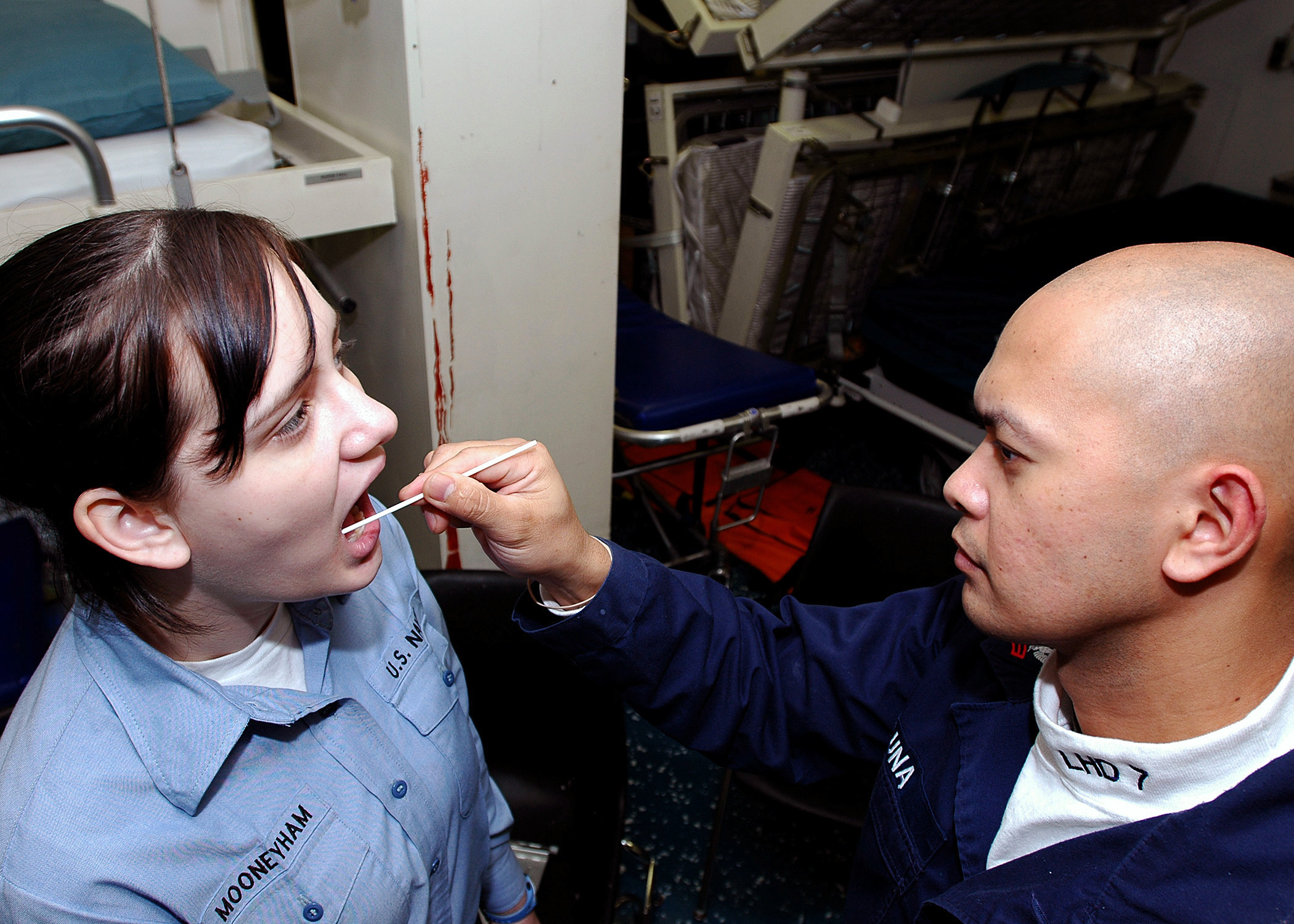 On June 3, 2013, the Supreme Court handed down a widely-anticipated opinion in Maryland v. King. In this case, the defendant’s DNA was collected by the state after an arrest for first-degree assault. Though he pled to a lesser misdemeanor charge, King’s DNA was found to be a match for an unsolved 2003 rape for which he was eventually convicted. The Court addressed the following issue: “whether the Fourth Amendment prohibits the collection and analysis of a DNA sample from persons arrested, but not yet convicted, on felony charges.” Justice Kennedy, writing for the Court, did not examine the issue in isolation, but considered it in light of Maryland’s DNA Collection Act, which contained various protections for the accused. Specifically, DNA could only be collected if the individual was charged with a violent crime, could not be recorded or stored until after the individual was arraigned, and samples would be destroyed if the criminal action did not result in a conviction; further, the DNA could not be used for any purpose other than identification.
The Court found that the DNA collection (via buccal swab) was a search for Fourth Amendment purposes, and employed a reasonableness test, balancing the intrusion on the individual against the legitimate interests of the state. The intrusion, the Court held, was minimal; on the contrary, the state’s interest (that is, “the need for law enforcement officers in a safe and accurate way to process and identify the persons and possessions they must take into custody”) was compelling. Justice Kennedy viewed this kind of DNA collection as part of identification and booking procedures such as fingerprinting or a “station-house search of the arrestee’s person and possessions.” He also noted that “the Act provides statutory protections that guard against further invasion of privacy.” Thus, by a five-four margin, the Court upheld Maryland’s DNA Collection Act along with similar statutes in twenty-eight states.
This opinion ignited controversy, and left lower courts (particularly those in states without DNA collection statutes) with little guidance regarding how to treat the collection of DNA from arrestees.
Some of the strongest objections have been from Fourth Amendment privacy advocates (such as Justice Scalia), who note that “your DNA can be taken and entered into a national DNA database if you are ever arrested, rightly or wrongly, and for whatever reason." The Ninth Circuit recently considered the case of an individual found guilty of a drug conspiracy charge, who sought to have his DNA and blood sample returned to him (and deleted from CODIS, the federal database) after his period of supervised release was complete. The majority did not reach his Fourth Amendment claim, but the dissent noted that Kinghad drastically expanded the pool of individuals subject to DNA testing by the state— an estimated fifty-two percent of men are arrested at some point in their lifetime.[1] These advocates argue that the individual’s privacy interest should have been weighted more heavily by the Court.
Other advocates argue that the State’s interest should be weighted less heavily, and question the identification rationale. Because of the permanent nature of individuals’ DNA profiles, a law enforcement agency can obtain the same degree of identification following an arrestee’s conviction as could be obtained before the conviction.[2] Further, officers are usually required to identify arrestees before sending DNA samples to be tested, so the King majority’s identification rationale is redundant.[3]
Regardless of scholarly dispute on Maryland v. King, lower courts have struggled to apply the Court’s reasoning in two situations. First, courts in jurisdictions without a DNA collection statute must determine whether such searches may proceed without statutory authorization, and whether they (the courts) have the authority to put protective limits on usage or storage absent statutory law on the topic. Secondly, courts are faced with cases where DNA was not taken at the time of arrest (the “booking procedures” outlined in King) but where prosecutors seek a court-ordered buccal swab for evidentiary purposes sometime before trial and before conviction.
In United States v. Calhoun, a federal district court summarized the issue:
The Supreme Court recently held that taking and analyzing a cheek swab of an arrestee’s DNA is a legitimate police booking procedure that is reasonable under the Fourth Amendment . . . but [here,] the government requests that the Court require DNA testing at a time when the interests identified in King – “the need for law enforcement officers in a safe and accurate way to process and identify the persons and possessions they must take into custody” – no longer apply. . . [T]o assert that the collection of DNA would be done at this point as part of legitimate police booking procedure would be a pretext; the defendant was arrested approximately eight (8) months ago.[4]
To resolve this tension, the Court required the government to show probable cause that “evidence of a crime will be found in a particular place”, namely, the defendant’s DNA, and found that the government had not satisfied that burden.[5]
The District Court for the Western District of New York addressed the same question and reached a different conclusion. InUnited States v. Navarro-Gonzales, as in Calhoun, the government sought a court-ordered buccal swab well after the defendant had been arrested, intending to gather evidence for trial. The Court purported to apply a probable cause test, and found that the government had satisfied its burden, but noted that King may have “alleviate[d] the need for a showing of probable cause.”[6]
Ryan Watson
Senior Staffer, Criminal Law Practitioner
Image by Mass Communication Specialist 2nd Class Michael Starkey, via Wikimedia Commons.

[2]Kelly Ferrell, Twenty-First Century Surveillance: DNA “Data-Mining” and the Erosion of the Fourth Amendment, 51 Hous. L. Rev. 229, 241 (Fall 2013) (referring to State v. King, 42 A.3d 549, 579 (Md. 2012), rev’d, Maryland v. King, 133 S.Ct. 1958 (2013)).
[3] Id. (citing Md. Code Regs. 29.05.1.4(K)-(L) (2012)).
[4] United States v. Calhoun, 2013 WL 3833206 (D. Ariz. July 24, 2013) (not yet reported).
[5] Id., at *1.
[6] United States v. Navarro-Gonzales, 2013 WL 3759956, *3 (W.D.N.Y. July 15, 2013) (slip op.).
Friday, June 14, 2013
Jerry Lee Jenkins: Wrongfully Convicted, Never Gave Up

June 7, 2013 is a day Jerry Lee Jenkins will always remember. It was the day he joined over three hundred other men and women who were exonerated with the use of post-conviction DNA testing. Mr. Jenkins had been fighting to prove his innocence since he was wrongfully convicted in 1987 for the brutal rape of a young woman in Waldorf, Maryland. On the evening of February 6, 1986 the woman, a real estate agent, was at a model home when a man came in, concealed his face with a stocking and pulled a knife on her. The man covered the woman’s face and proceeded to rape her. The woman was able to get a partial glance at his face. The woman would later admit at a photo lineup with Mr. Jenkins and to the jury that Mr. Jenkins looked like the man who attacked her but she was not sure it was him. An expert from the FBI testified at trial that Mr. Jenkins was within four percent of the population that could have contributed to the biological material left at the crime, which is still a large pool of possible offenders. Mr. Jenkins was convicted regardless.
Before Mr. Jenkins was convicted, a detective noticed that the 1986 rape was very similar to another rape committed over a year prior, in 1984, and only a few miles from the 1986 rape. That rape involved a similar victim, location, and offender characteristics. The police even contacted the FBI to conduct a profile of a potential serial rapist. Mr. Jenkins, only twenty-five at the time, had recently been arrested on an unrelated crime when the police decided to interview him. Mr. Jenkins was tested against the evidence from the 1984 rape and he was excluded as the suspect. However, the police continued to try to build a case against Mr. Jenkins for the 1986 rape. They showed the victim an outdated picture of Mr. Jenkins in a photo line-up. She said Mr. Jenkins and her attacker looked similar but admitted she could not be certain they were the same.
Eyewitness misidentification has been found in seventy-five percent of wrongful conviction cases and is the leading contributor of wrongful convictions. There has been a considerable amount of research conducted to determine why such misidentification occurs so frequently and methods to prevent it. People often think their memory is better than it actually is, especially in stressful situations. The woman in the 1986 rape admitted that she was not sure that Mr. Jenkins was her attacker; however, the jury was likely influenced by her testifying that they looked similar.
Eyewitness misidentifications can also be caused by suggestive techniques during a line-up. This may include the suspect wearing a different colored shirt than the rest of the people in a line-up or a police officer telling the witness to take another look at the suspect. A successful method to diminish the risk of eyewitness misidentifications is to administer a “double-blind” line-up in which neither the person conducting the line-up nor the witness knows the suspect. Researchers suggest that the line-up should be administered with photographs presented to the witness in sequential order, having the witness look at each photo, determine if it is the offender and move on to the next photo. Defense attorneys should fight for this kind of photo line-up or ensure that traditional line-ups are not overly suggestive. Prosecutors and police ought to be just as concerned with the high percentage of eyewitness misidentifications that seem to occur in wrongful conviction cases.
After Mr. Jenkins was convicted, he sought to have DNA testing done but because DNA profiling was in its early stages, the test was inconclusive. Mr. Jenkins was sentenced to life in prison. He continued to file unsuccessful appeals as the process of DNA profiling advanced. In 2000 when it seemed more likely that Mr. Jenkins could get another trial after the Maryland Court of Appeals ruled that evidence of another perpetrator could be permitted at trial, the prosecution offered to vacate Mr. Jenkins’ conviction if he took an Alford plea, a guilty plea that acknowledges the prosecution has sufficient evidence to convict him on the 1986 rape but allows him to maintain his innocence. In return, the prosecution would recommend a shorter sentence with the possibility of release in 2010 on probation. He accepted.
In 2004 the DNA from the 1984 rape was run through CODIS, the FBI’s DNA database. The DNA belonged to Norman Derr, who was serving a life sentence in Virginia for a 1988 rape that was very similar to the Maryland rapes. Mr. Derr was suspected of multiple rapes in Virginia. In 2007 the Mid Atlantic Innocence Project joined Mr. Jenkins’ fight, accepting him as a non-DNA case since it was believed that there was no more evidence from the 1986 rape that could be tested.
In 2010 Mr. Jenkins was released, but he was not finished with his fight to clear his name. A year later, the big break came when a box of evidence from the 1986 rape was found and DNA testing was conducted. Not only was Mr. Jenkins excluded by the DNA in the 1986 rape but the DNA evidence matched Mr. Derr’s DNA. On June 7, 2013 Mr. Jenkins finally won his motion for a new trial, filed previously in February and supported by the State, the case was dismissed.
Mr. Jenkins’ story is one of many in which post-conviction DNA testing was used to right a terrible wrong. As of May 24, 2013, all 50 states have laws for access to post-conviction DNA testing. These laws are extremely important in overturning wrongful convictions, enabling the true perpetrators to be incarcerated and ensuring that the innocent are freed.
Unfortunately, there are cases of wrongful convictions that do not contain any DNA evidence that can be tested. Those battles for the truth can be much more difficult. It is essential that the public and especially members of the criminal justice system are aware of wrongful convictions and their characteristics, as well as the measures that can be taken to implement change to correct and prevent them, such as DNA Access laws or non-suggestive photo line-ups. The adage that it is better to let 1,000 guilty men go free than convict an innocent man may one day be unnecessary. Relatively simple measures can be taken to prevent those guilty men from going free and that innocent person from being wrongfully convicted in the first place.
Raleigh Mark
Blog Editor, Criminal Law Brief
Friday, June 7, 2013
DNA Testing the Next Chapter - The Supreme Court's Ruling in Maryland v. King
 On June 3, 2013 the Supreme Court issued its 5-4 opinion in Maryland v. King, holding that when a suspect is arrested with probable cause for a serious offense it is a reasonable search for the officers to collect a DNA swab from the suspect. Writing for the majority, Justice Kennedy analogized the DNA swab to fingerprinting and photographing as legitimate and routine police booking procedures. The case before the Court involved Mr. King who, in 2009, was arrested for first and second-degree assault and had a DNA sample taken as part of the routine booking procedures for serious offenses in Maryland. Maryland law allows DNA samples to be taken from arrestees charged with violent crimes, burglaries, and attempts to commit either a violent crime or burglary. Md. Pub. Saf. Code Ann § 504(a)(3)(i) (Lexis 2011). The DNA sample was matched to an unsolved rape case from 2003, and Mr. King was subsequently charged and convicted for the 2003 rape. Mr. King moved to suppress the DNA evidence as it violated his Fourth Amendment rights, and the Maryland Court of Appeals agreed with Mr. King finding that the DNA swab, in this context, was an unreasonable search. The Supreme Court reversed the Maryland Court of Appeals’ decision.
The majority reasoned that identifying the individuals who are brought into custody is clearly within the State’s interest. As the State already engages in similar identifying behavior by fingerprinting suspects, obtaining the DNA sample is just one more source of identification. The majority reasoned that the DNA swab is limited in its intrusiveness, as it simply requires the swab of a Q-tip on the inside of the suspect’s cheek. The Court found the government’s interest in obtaining identifying information outweighed the minimally intrusive search of the DNA swab.
In addition, a person in police custody already has a diminished expectation of privacy and allowing the DNA sample to be collected for identification purposes would not interfere with this expectation. Under Maryland law, the samples of DNA obtained are solely used for the purposes of identification and not to determine specific genetic traits. The Court equated this limited scope to the way a drug-test merely tests for the presence of drugs and does not evaluate an individual’s complete medical history. Accordingly, the Court held the DNA testing of arrestees to be a part of the routine booking procedures and a reasonable search.
The dissent, written by Justice Scalia, was premised on the idea that a DNA swab is not solely used for identification purposes but used to discover criminal wrongdoing. Justice Scalia asserted that an invasion of the body without suspicion, no matter how small, is never allowed when the aim is a criminal investigation. He found that the majority’s use of the term “identification” actually means identifying other crimes the suspect may have committed. Justice Scalia further explained the differences between how DNA samples and fingerprints are analyzed, concluding that the two systems cannot be compared. For example, he asserted it takes about twenty-seven minutes to get a response for a fingerprint submission, while it can take several months for a DNA analysis. While he contended that it is “noble ” to want to solve cold cases, this state interest does not outweigh an individual’s interest in protection from suspicionless searches.
Currently, there are twenty-eight states along with the Federal Government that conduct DNA testing on suspects in custody. Many of these states have laws similar to Maryland, where the testing is only done for specific offenses; however, the Federal Government conducts testing on all suspects. The minimally intrusive act of a cheek swab potentially provides law enforcement with invaluable information. The analogy to fingerprint collection is apt, because both have similar identification functions. Further, police departments have the similar ability with fingerprints, as with DNA, to match the samples to previously unsolved cases. In this respect the collection of DNA and fingerprints serve identical purposes and thus should be treated similarly under the law. Consequently, allowing officers to utilize DNA testing as part of their routine booking procedures permits the full use of technology in criminal investigations.
Some fear that allowing DNA collection to be used on arrestees is a slippery slope and will potentially lead to all citizens having their DNA catalogued. However, this fear seems unwarranted because the Supreme Court has acknowledged that the collection of DNA constitutes a search and the holding in this case is only applicable to suspects in custody for serious offenses. The majority does not define what offenses constitute serious offenses, thus seeming to allow the states to define them; the Maryland statute could provide some guidance. Despite leaving the definition open to interpretation, the Court acknowledged that this type of testing should not be done in every situation.
The use of this technology could help to solve cold cases and ensure that the correct people are prosecuted for crimes. Ensuring the correct people are prosecuted is not only in the State’s interest, but also the public’s interest. Moreover, unlike other types of searches, DNA testing, as it is currently being used, only reveals a person’s identification. There should be no fear that personal, private information will be revealed, like “at what hour of the night the lady of the house takes her daily sauna and bath.” Kyllo v. United States. With the proper controls in place, allowing the collection of DNA swabs from individuals in custody for serious offenses based on probable cause, will undoubtedly protect the State’s and the public’s interest.
Rochelle Brunot
Associate Publications Editor, Criminal Law Brief
Subscribe to:
Posts (Atom)