
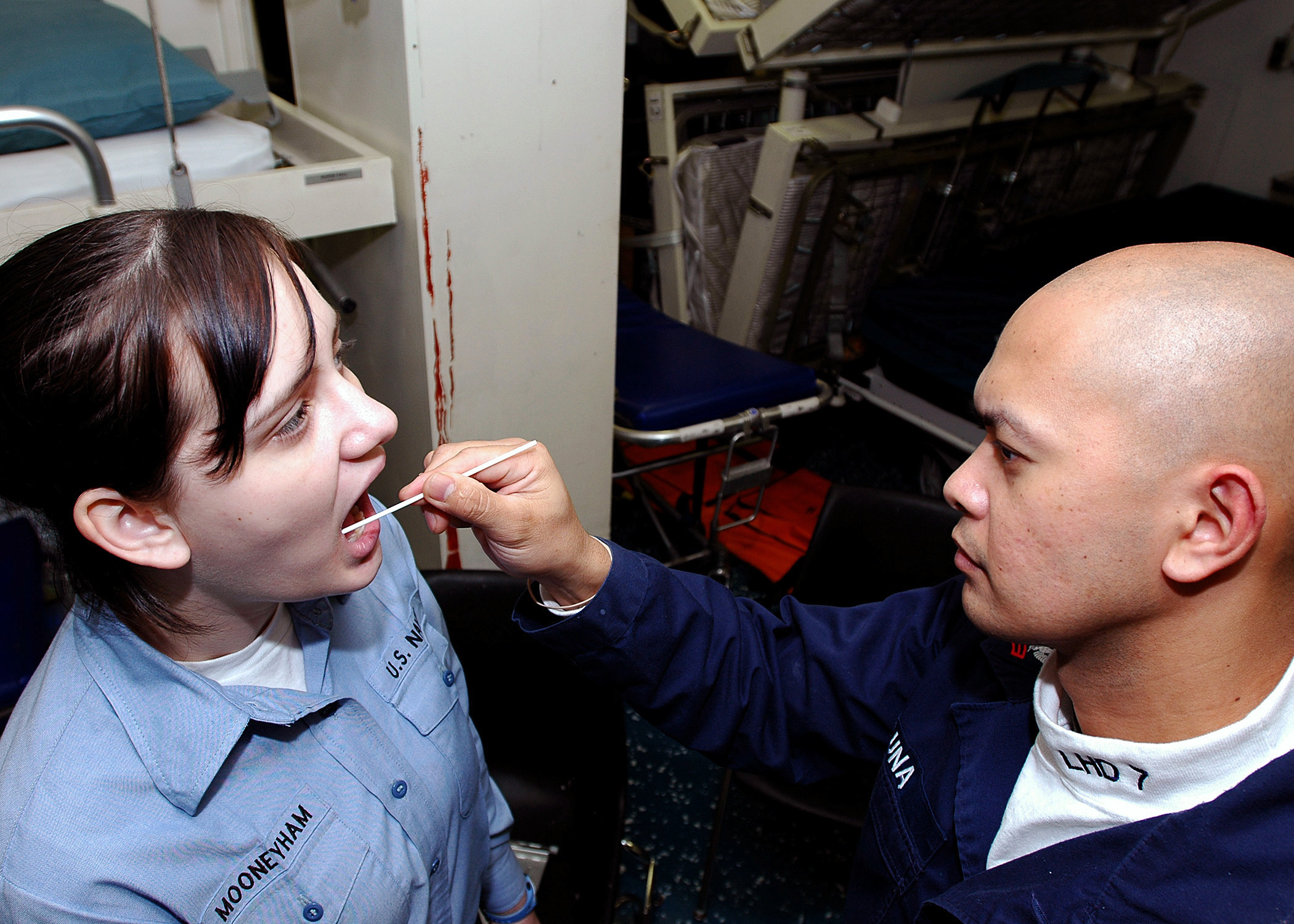
 On June 3, 2013, the Supreme Court handed down a widely-anticipated opinion in Maryland v. King. In this case, the defendant’s DNA was collected by the state after an arrest for first-degree assault. Though he pled to a lesser misdemeanor charge, King’s DNA was found to be a match for an unsolved 2003 rape for which he was eventually convicted. The Court addressed the following issue: “whether the Fourth Amendment prohibits the collection and analysis of a DNA sample from persons arrested, but not yet convicted, on felony charges.” Justice Kennedy, writing for the Court, did not examine the issue in isolation, but considered it in light of Maryland’s DNA Collection Act, which contained various protections for the accused. Specifically, DNA could only be collected if the individual was charged with a violent crime, could not be recorded or stored until after the individual was arraigned, and samples would be destroyed if the criminal action did not result in a conviction; further, the DNA could not be used for any purpose other than identification.
The Court found that the DNA collection (via buccal swab) was a search for Fourth Amendment purposes, and employed a reasonableness test, balancing the intrusion on the individual against the legitimate interests of the state. The intrusion, the Court held, was minimal; on the contrary, the state’s interest (that is, “the need for law enforcement officers in a safe and accurate way to process and identify the persons and possessions they must take into custody”) was compelling. Justice Kennedy viewed this kind of DNA collection as part of identification and booking procedures such as fingerprinting or a “station-house search of the arrestee’s person and possessions.” He also noted that “the Act provides statutory protections that guard against further invasion of privacy.” Thus, by a five-four margin, the Court upheld Maryland’s DNA Collection Act along with similar statutes in twenty-eight states.
This opinion ignited controversy, and left lower courts (particularly those in states without DNA collection statutes) with little guidance regarding how to treat the collection of DNA from arrestees.
Some of the strongest objections have been from Fourth Amendment privacy advocates (such as Justice Scalia), who note that “your DNA can be taken and entered into a national DNA database if you are ever arrested, rightly or wrongly, and for whatever reason." The Ninth Circuit recently considered the case of an individual found guilty of a drug conspiracy charge, who sought to have his DNA and blood sample returned to him (and deleted from CODIS, the federal database) after his period of supervised release was complete. The majority did not reach his Fourth Amendment claim, but the dissent noted that Kinghad drastically expanded the pool of individuals subject to DNA testing by the state— an estimated fifty-two percent of men are arrested at some point in their lifetime.[1] These advocates argue that the individual’s privacy interest should have been weighted more heavily by the Court.
Other advocates argue that the State’s interest should be weighted less heavily, and question the identification rationale. Because of the permanent nature of individuals’ DNA profiles, a law enforcement agency can obtain the same degree of identification following an arrestee’s conviction as could be obtained before the conviction.[2] Further, officers are usually required to identify arrestees before sending DNA samples to be tested, so the King majority’s identification rationale is redundant.[3]
Regardless of scholarly dispute on Maryland v. King, lower courts have struggled to apply the Court’s reasoning in two situations. First, courts in jurisdictions without a DNA collection statute must determine whether such searches may proceed without statutory authorization, and whether they (the courts) have the authority to put protective limits on usage or storage absent statutory law on the topic. Secondly, courts are faced with cases where DNA was not taken at the time of arrest (the “booking procedures” outlined in King) but where prosecutors seek a court-ordered buccal swab for evidentiary purposes sometime before trial and before conviction.
In United States v. Calhoun, a federal district court summarized the issue:
The Supreme Court recently held that taking and analyzing a cheek swab of an arrestee’s DNA is a legitimate police booking procedure that is reasonable under the Fourth Amendment . . . but [here,] the government requests that the Court require DNA testing at a time when the interests identified in King – “the need for law enforcement officers in a safe and accurate way to process and identify the persons and possessions they must take into custody” – no longer apply. . . [T]o assert that the collection of DNA would be done at this point as part of legitimate police booking procedure would be a pretext; the defendant was arrested approximately eight (8) months ago.[4]
To resolve this tension, the Court required the government to show probable cause that “evidence of a crime will be found in a particular place”, namely, the defendant’s DNA, and found that the government had not satisfied that burden.[5]
The District Court for the Western District of New York addressed the same question and reached a different conclusion. InUnited States v. Navarro-Gonzales, as in Calhoun, the government sought a court-ordered buccal swab well after the defendant had been arrested, intending to gather evidence for trial. The Court purported to apply a probable cause test, and found that the government had satisfied its burden, but noted that King may have “alleviate[d] the need for a showing of probable cause.”[6]
Ryan Watson
Senior Staffer, Criminal Law Practitioner
Image by Mass Communication Specialist 2nd Class Michael Starkey, via Wikimedia Commons.
[2]Kelly Ferrell, Twenty-First Century Surveillance: DNA “Data-Mining” and the Erosion of the Fourth Amendment, 51 Hous. L. Rev. 229, 241 (Fall 2013) (referring to State v. King, 42 A.3d 549, 579 (Md. 2012), rev’d, Maryland v. King, 133 S.Ct. 1958 (2013)).
[3] Id. (citing Md. Code Regs. 29.05.1.4(K)-(L) (2012)).
[4] United States v. Calhoun, 2013 WL 3833206 (D. Ariz. July 24, 2013) (not yet reported).
[5] Id., at *1.
[6] United States v. Navarro-Gonzales, 2013 WL 3759956, *3 (W.D.N.Y. July 15, 2013) (slip op.).


