In October of last year, I wrote “Buccal Swab ‘Booking Procedures’: Lower Courts Struggle to Apply Maryland v. King,” a blog post outlining some potential problems with the reasoning in Maryland v. King, the landmark DNA collection case handed down by the Supreme Court last June. At the time, I focused on federal district court interpretations of King, but appeals courts have also begun ruling on these cases. On March 20, 2014, the Ninth Circuit, sitting en banc, issued an opinion in Haskell v. Harris upholding California’s broad DNA Collection Act.

Friday, April 4, 2014
All Felonies are Serious Offenses: Ninth Circuit Upholds California DNA Collection Law
In October of last year, I wrote “Buccal Swab ‘Booking Procedures’: Lower Courts Struggle to Apply Maryland v. King,” a blog post outlining some potential problems with the reasoning in Maryland v. King, the landmark DNA collection case handed down by the Supreme Court last June. At the time, I focused on federal district court interpretations of King, but appeals courts have also begun ruling on these cases. On March 20, 2014, the Ninth Circuit, sitting en banc, issued an opinion in Haskell v. Harris upholding California’s broad DNA Collection Act.

Tuesday, April 1, 2014
Kevin Martin: Innocent.
 |
| Kevin Martin |
Friday, March 28, 2014
Prosecutorial Discretion: When Is Enforcement Discriminatory?
 |
| Dinesh D'Souza |
In criminal law,
those accused of wrongdoing typically claim innocence and maintain that they
have done nothing wrong. But what about
when an individual admits to the crime itself while arguing that the
enforcement of the specific law against him is discriminatory in nature?
Tuesday, March 25, 2014
Guest Post: 5 Reasons Why Rape Victims Struggle for Justice
Throughout history rape has been recognized as a
crime, although criminal codes – and the very definition of rape – have varied
from culture to culture and from one era to another. Whether rape victims get justice has always
depended upon where (and when) they lived. In the modern-day United States we like to
think we are relatively enlightened in this regard. We have the advantage of heightened
educational and legislative efforts over the past forty years, driven largely
by the feminist and human rights movements. Groundbreaking books such as Susan
Brownmiller’s classic 1975 work, Against
Our Will: Men, Women and Rape, explored the dynamics of rape. Contrary to the subtitle, Brownmiller’s book
tackled not just male-on-female rape, but also homosexual rape (particularly in
prisons) and the sexual assault of children. The net result of four decades of education is
that attitudes and laws are more protective of the victims than they used to
be, at least in the U.S. and many other First World countries.
Friday, March 21, 2014
Two Implications from the Fernandez v. California Ruling
On
February 25, 2014, in an apparent exercise in judicial restraint, the Supreme
Court reaffirmed that a co-occupant’s physical presence is key in
determining whether her objection to a warrantless search of her home overcomes
a co-occupant’s permission in Fernandez v. California. The majority opinion, written by Justice
Alito, narrowed the exception laid out in Georgia v. Randolph, which held a
co-occupant’s present objection
overrides a separate co-occupant’s willingness to consent. In Fernandez, a co-occupant’s objection is
valid only as long as the co-occupant is physically present. In practice, in scenarios involving a
co-occupant willing to grant consent to a warrantless search, the police need
only wait till the objecting co-tenant leaves or remove him from the premises
so long as the removal is justified as a reasonable seizure.
Tuesday, March 18, 2014
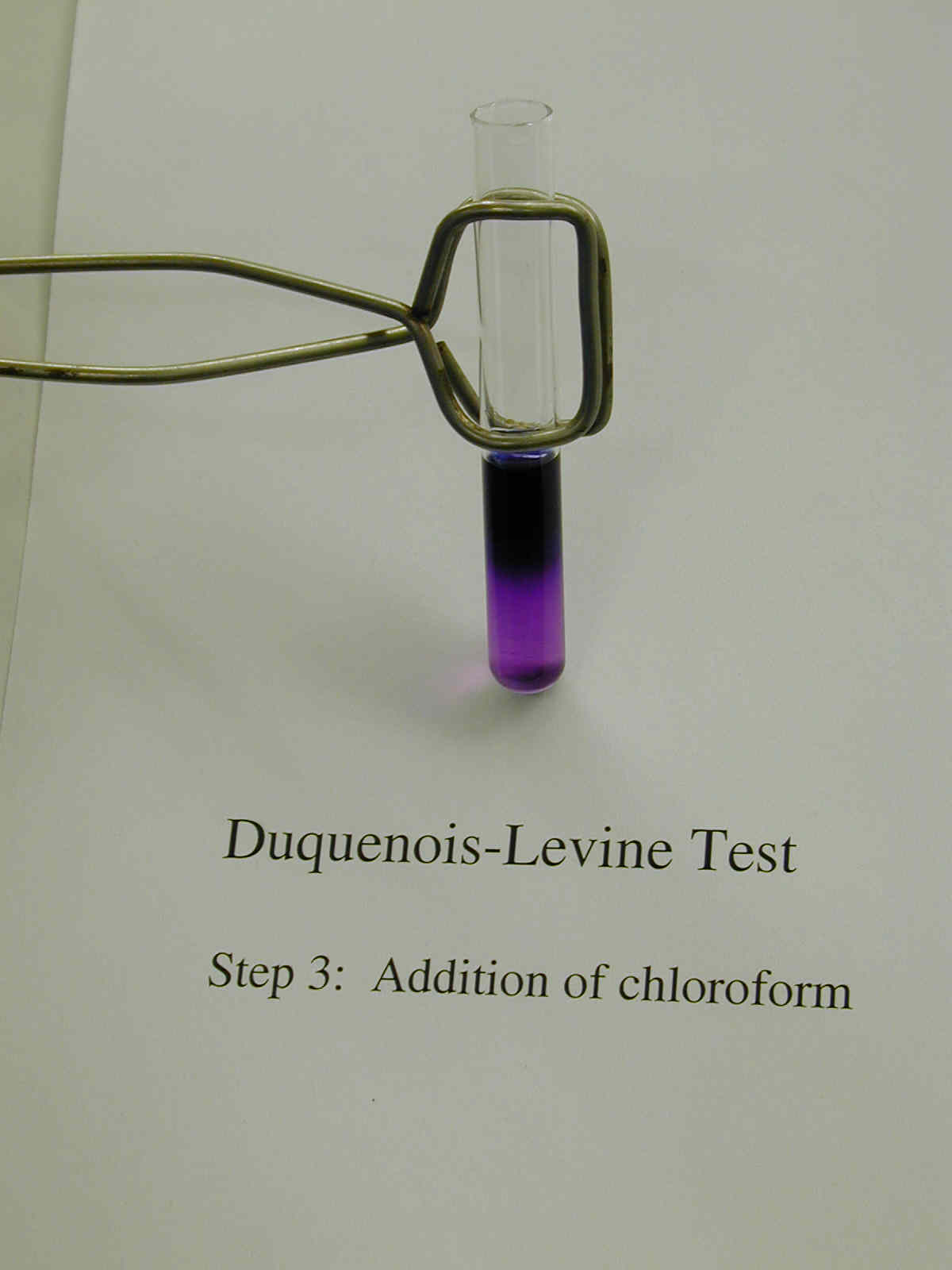
Presumptive Specificity: Examining the Duquenois-Levine Field Test for Marijuana
Practitioners
who have handled cases involving marijuana are likely to be familiar with the Duquenois-Levine
field test. As of 2008, the NIK NarcoPouch 908 was the most commonly used marijuana field testing kit utilizing
the Duquenois-Levine Reagent. However, despite its wide use, forensic drug
expert John Kelly stated in a 2008 report to the California Attorneys for
Criminal Justice (CACJ) that there were no published studies examining the
validity of the field test. Kelly’s report, which was written pursuant to one such study, criticizes the
Duquenois-Levine field test as being non-specific and rendering false positives,
which he asserts violate Supreme Court rulings and undermines the integrity of tens of thousands of marijuana convictions.
Friday, March 14, 2014
“Gosh, we’re putting somebody to death, we should have a 100% confidence level” -- Justice Sotomayor, Hall v. Florida 2014
 The Eighth Amendment of the United States Constitution bars
the infliction of cruel and unusual punishments. On Monday, March 3, 2014, the Supreme Court heard arguments in Hall v. Florida, a case that presents the biggest challenge to the death penalty in over a
decade; the Court is being asked to decide if under the Eighth Amendment, Florida
can put to death a man who may be mentally delayed given its statutory scheme
for determining "mental retardation." If this sounds familiar it is because in
2002, the Court decided Atkins v. Virginia, in which it held that “executions of mentally retarded criminals
were cruel and unusual punishments prohibited by the Eighth Amendment.” However, in Atkins, the Court also left it to the states to “enforce the
constitutional restriction” it announced, which is where Hall v. Florida comes in.
Tuesday, March 11, 2014
Liar Liar: The Fine Line between Deception and Coercion
We have all seen scenes like this one play out on TV shows
like Law and Order: a suspect is taken into an interrogation room and a police
officer or two tries to elicit a confession from the suspect. The suspect is uncooperative, so the officers
begin to rely on deceptions, lies, and other trickery. Maybe something like: we found some
fingerprints, and we are running them right now, and we know they are going to
match, so you might as well confess before that happens and pray that gets you
some leniency. Courts have generally
held that confessions obtained because of deception can be used as evidence. However, on February 20, 2014, the New York Court of Appeals ruled unanimously that the deception can only go so far,
drawing a line between police tactics that are tolerable and the ones that move
into coercive territory.
Subscribe to:
Posts (Atom)